
Quality inspections
Quality inspections are essential to ensure the safety, durability, and sustainability of all types of assets.
SOCOTEC provides a comprehensive inspection service that ranges from the initial assessment of the condition of your assets to the recommendation of solutions to improve their performance, all based on accurate data and expert analysis.
Extensive array of tools for precise assessment
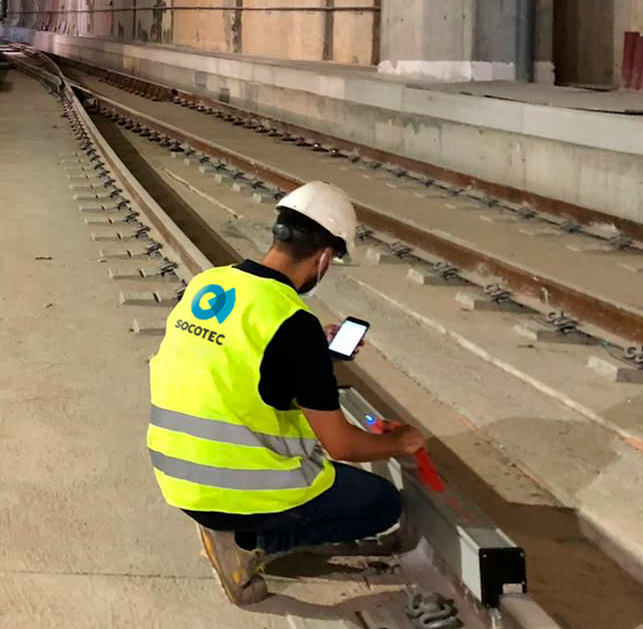
We apply a wide range of inspection techniques to collect accurate and relevant data on the condition of your assets.
This data allows us to identify with great precision the repair and maintenance needs, guaranteeing the safety and extending the useful life of your assets.

Talk to our experts



Building inspections
Review of the structure, facilities and habitability of homes and buildings to ensure the safety and comfort of their occupants.

Industrial maintenance inspections
Assessment of the condition of industrial equipment and facilities to ensure their proper functioning and prevent breakdowns.

Non-Destructive Testing (NDT)
Non-destructive evaluation using techniques that allow the analysis of physical, chemical or mechanical properties of materials without altering their shape or properties.

Noise impact assessment (NIA)
Measurement and analysis of environmental noise to assess its impact and propose corrective solutions.

Fire protection quality control
Verification of compliance with fire protection regulations in buildings and facilities.

MEP commissioning
Verification and commissioning of MEP (mechanical, electrical and plumbing) systems.
CERTIFICATION

Interdisciplinary team
SOCOTEC provides a comprehensive inspection service through a multidisciplinary team of highly qualified technicians.
We hold international certifications in various fields and have extensive experience in projects worldwide.
We are proficient in different inspection techniques and utilize the latest technologies to ensure the accuracy, efficiency, and reliability of our work.
DIGITALIZATION
Quick response
The digitalization of our processes allows us to deliver the results of the work carried out in a short period of time. In this way, our mission aligns with our clients' objective: to provide truthful, critical and useful information immediately, facilitating and streamlining decision-making, construction or operation processes.
What is the purpose of inspections?
At present, the large volume of existing assets requires efficient management to optimize their useful life and minimize maintenance costs.
SOCOTEC helps you achieve this goal by implementing customized inspection plans tailored to your specific needs, based on accurate data and expert analysis.
Inspection plan
Profit impact

A well-designed inspection plan can offer a wide range of benefits for our clients in the short, medium, and long term.
1. Increased asset safety and reliability
2. Reduced maintenance costs
3. Optimized asset lifespan
4. Improved operational efficiency
5. Regulatory compliance
A well-designed inspection plan can offer a wide range of benefits for our clients in the short, medium, and long term.
1. Increased asset safety and reliability
2. Reduced maintenance costs
3. Optimized asset lifespan
4. Improved operational efficiency
5. Regulatory compliance
SOCOTEC: Your partner for efficient asset management
SOCOTEC has a multidisciplinary team of experts in different areas of knowledge, such as civil engineering, energy, and structural engineering.
This extensive experience allows us to offer comprehensive inspection solutions for all types of projects, from the construction of new infrastructures to the maintenance of existing facilities.
Aureli Ibars
NDT & Inspections Manager

"At SOCOTEC, we believe that inspection is an ongoing process that should accompany the project throughout each of its phases, from conception to operation and maintenance."
Ofrecemos una amplia gama de servicios de inspección personalizados para cada etapa, adaptándonos a las necesidades específicas de cada proyecto."
Do you want to know more about our solutions?
Inspections FAQs
Talk to our experts

