
Industrialized construction: The definitive solution to the housing challenge in Catalonia?
SOCOTEC gathers leading sector stakeholders to discuss industrialized construction’s potential to speed up affordable housing, cut lead times, and enhance sustainability in a high-pressure market.
Access to housing has become one of the greatest social and economic challenges in Catalonia. With forecasts pointing to a need for 180,000 new units over the next five years, the sector is forced to find formulas that accelerate production without compromising quality or efficiency.
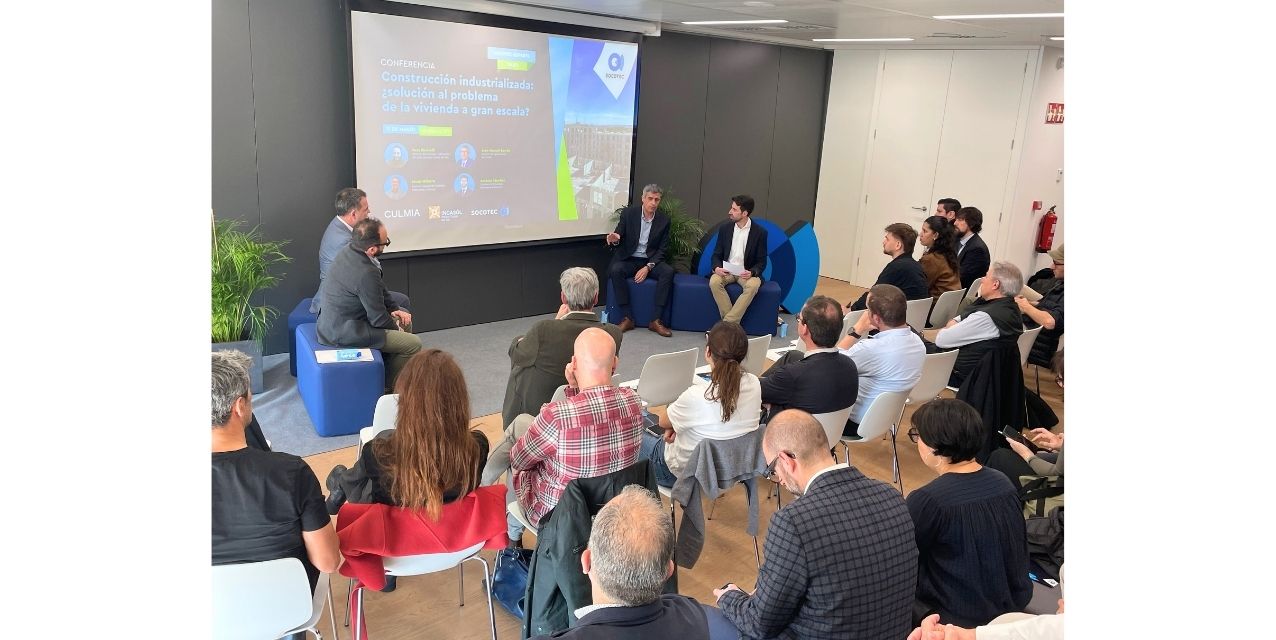
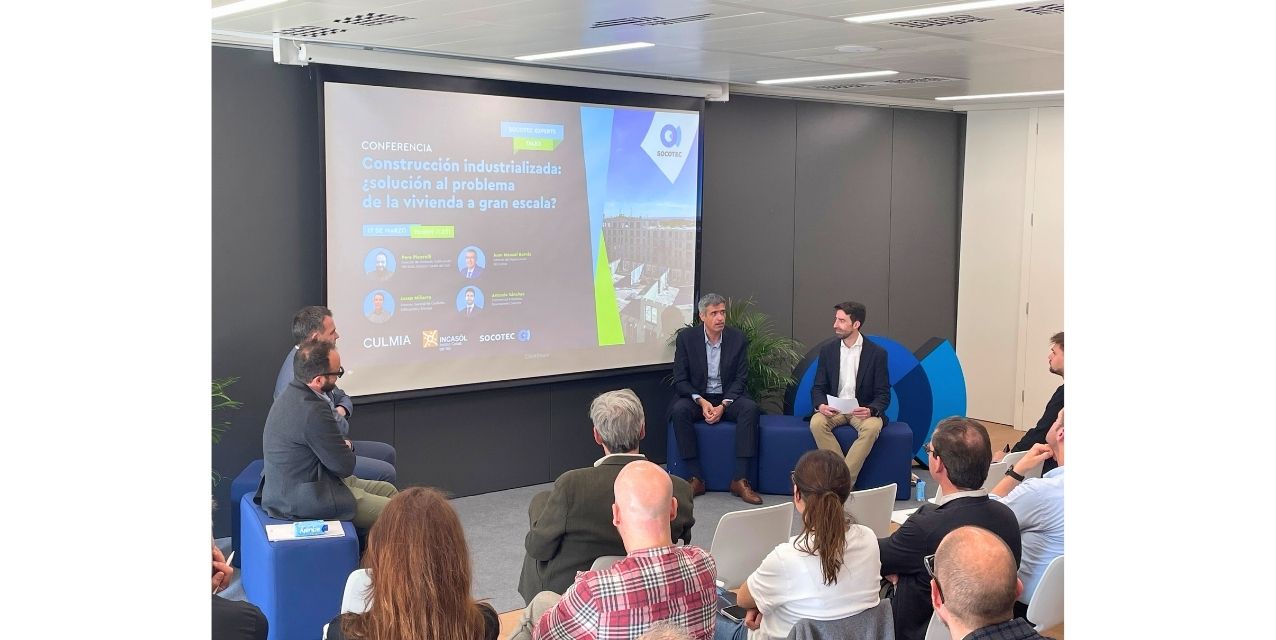
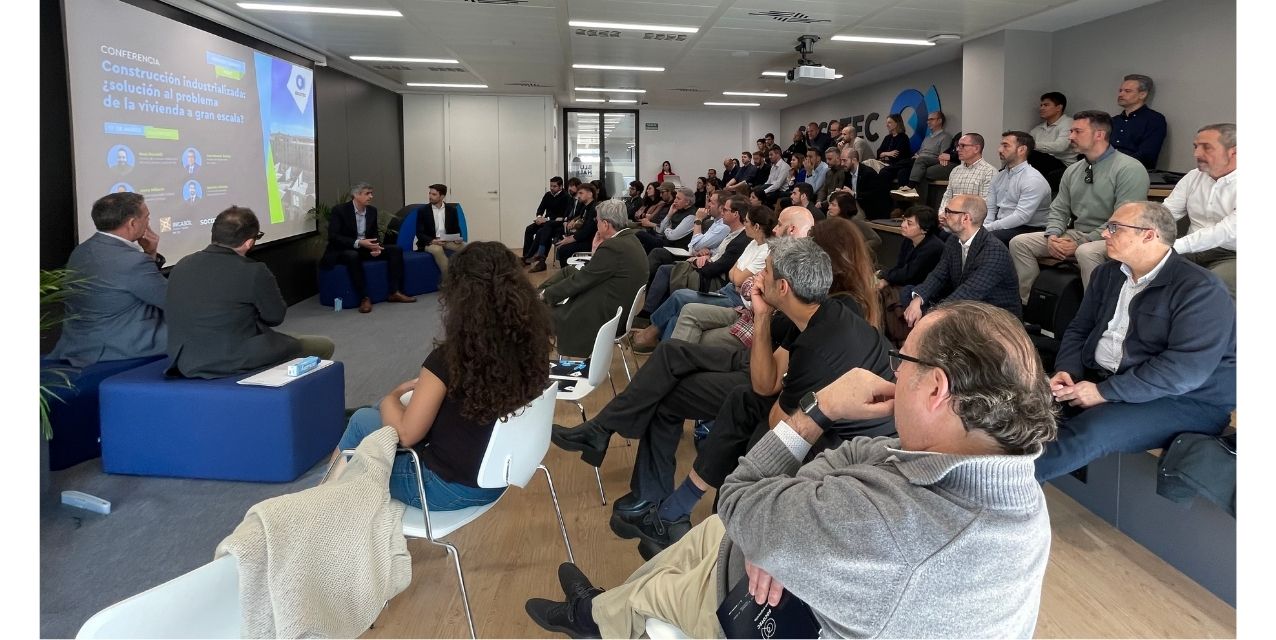
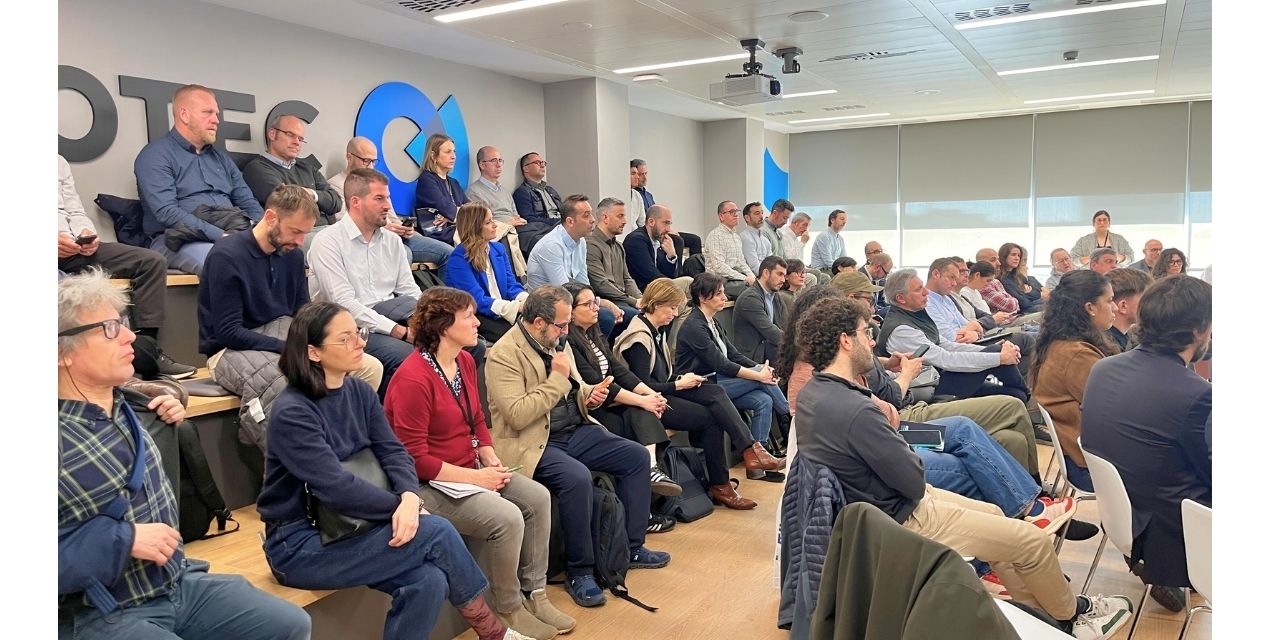
In this context, SOCOTEC has organized a debate session to address a key question: Is industrialized building a structural solution or a process improvement?
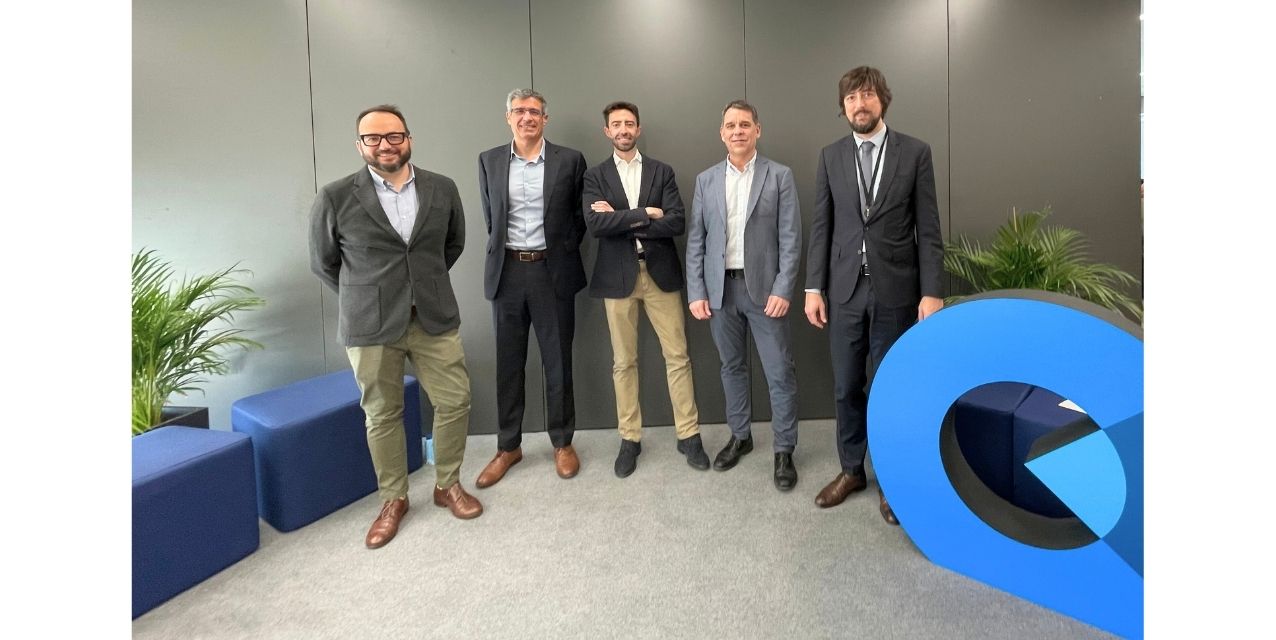
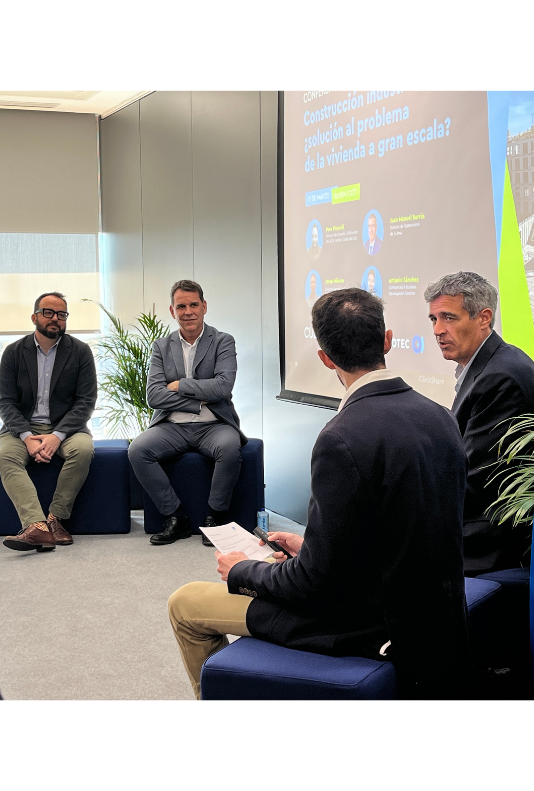
The session, moderated by Antonio Sánchez Gea (SOCOTEC), featured leading voices from the real estate value chain: Pere Picorelli, Director of Housing and Building at Incasòl; Juan Manuel Borras, Operations Director at Culmia; and Josep Miñarro, General Director of Cities, Building, and Energy at SOCOTEC.

Beyond Technique: A Paradigm Shift
The debate began by analyzing whether industrialization can, on its own, resolve the structural housing problem. The panelists agreed that while the technology exists, access to housing depends on external factors such as land management, slow licensing processes, and the regulatory framework.
However, industrialization changes the rules of the game in execution. "It is not just about building under a roof or prefabricating, but about changing how we design and coordinate," it was stated during the session. The transition from "building a project in an industrialized way" to "industrializing the project from its conception" requires a collaborative relationship from minute zero between the developer, the contractor, and the engineering firm.
Economic Competitiveness: Time as a Financial Asset
One of the most debated points during the day was the economic competitiveness of industrialized construction compared to conventional methods. The speakers agreed that, in terms of direct execution costs, industrialization still faces the challenge of lacking sufficient economies of scale in the national market. However, the analysis changes drastically when the time variable is introduced into the project's financial equation.
1. Drastic Reduction in Timelines: The Boadilla del Monte Case
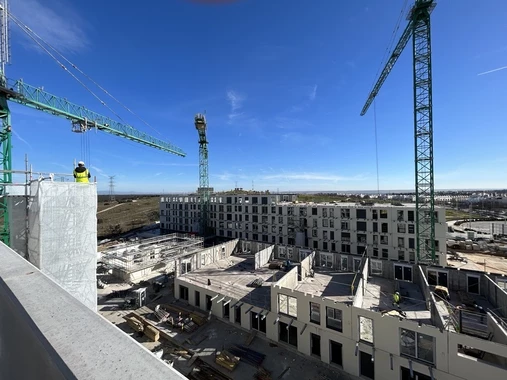
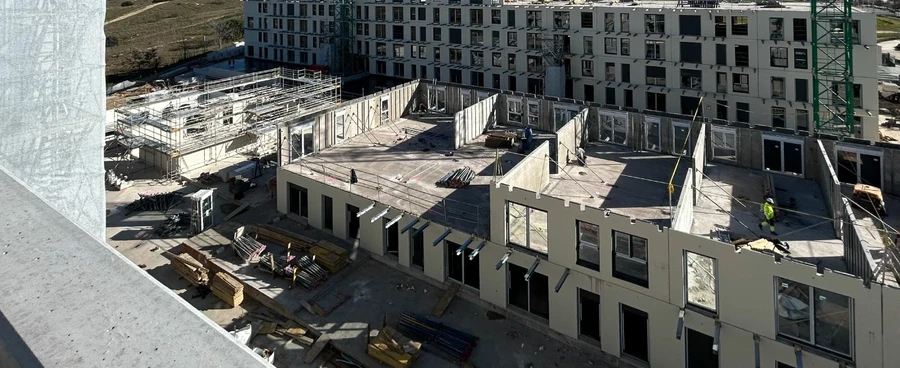
Speed of delivery is not just a logistical benefit, but a high-impact competitive advantage. Success stories were highlighted, such as the residential project in Boadilla del Monte, where the use of industrialized systems allowed the work to be completed in 22 months, achieving a 6-month reduction compared to traditional construction standards.
This 25% reduction in execution time allows for:
Much earlier commercialization or operational start-up.
A significant reduction in financial and structural costs.
Mitigation of the impact of material inflation by reducing the exposure period on-site.
2. Uncertainty Control and "Non-Quality Costs"
Unlike traditional construction, where budgets often suffer deviations due to on-site unforeseen events, the industrialized process is based on a collaborative and digital environment (BIM) from the design phase. This allows for exhaustive control of so-called "non-quality costs."
By manufacturing in a controlled environment, execution errors, rework, and waste are minimized. For a developer with clear delivery commitments, industrialization transforms risk into certainty, ensuring that the agreed price and delivery date are met with surgical precision.
3. A Change in Cost Structure
Ultimately, the session concluded that although the cost per square meter may seem higher at the source, process efficiency balances the scales. Industrialization should not be seen as a more expensive product, but as an investment in predictability and speed—factors that are critical today for the viability of any major development in Catalonia.

Sustainability
Public momentum
The 50,000 Plan positions itself as the engine for public housing on disused land between now and 2030, prioritizing industrialized construction to accelerate delivery timelines. This institutional momentum acts as the necessary catalyst for the sector to invest in technology and consolidate a solid ecosystem.
Furthermore, this model stands out for its sustainability: by integrating the circular economy and rigorous waste control, it guarantees a level of technical quality and environmental efficiency that traditional construction can hardly match.
A 360-degree and Honest Vision
From SOCOTEC, Josep Miñarro highlighted the fundamental role of specialist engineering in this process. In a model where the project is defined beforehand and errors cannot be corrected on-site, the technical capacity to design with millimeter precision and coordinate non-linear processes is the guarantee of success for the future housing stock.
The day's conclusion was clear: industrialization is not a magic wand, but it is the inevitable path. For its implementation to grow, a 360-degree vision is required—one that honestly integrates land management with current industrial capacity.
The 50,000 Plan positions itself as the engine for public housing on disused land between now and 2030, prioritizing industrialized construction to accelerate delivery timelines. This institutional momentum acts as the necessary catalyst for the sector to invest in technology and consolidate a solid ecosystem.
Furthermore, this model stands out for its sustainability: by integrating the circular economy and rigorous waste control, it guarantees a level of technical quality and environmental efficiency that traditional construction can hardly match.
A 360-degree and Honest Vision
From SOCOTEC, Josep Miñarro highlighted the fundamental role of specialist engineering in this process. In a model where the project is defined beforehand and errors cannot be corrected on-site, the technical capacity to design with millimeter precision and coordinate non-linear processes is the guarantee of success for the future housing stock.
The day's conclusion was clear: industrialization is not a magic wand, but it is the inevitable path. For its implementation to grow, a 360-degree vision is required—one that honestly integrates land management with current industrial capacity.
The day's conclusion was clear: industrialization is not a magic wand, but it is the inevitable path. For its implementation to grow, a 360-degree vision is required—one that honestly integrates land management with current industrial capacity.
Does your next project need certainty in timelines and costs?