
Article written by

Engineering to preserve heritage: restoration, rehabilitation and conservation
Mon 15/06/2026 - 14:00
Technical and strategic differences in heritage intervention
In the field of conservation of built heritage, technical terminology defines not only the processes but also the philosophy of intervention.
Each historic building requires a particular approach that may involve different degrees of action depending on its specific needs and heritage values.


Tipos de actuaciones para conservar el patrimonio:
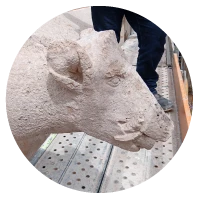
Heritage Conservation
Conservation is the set of actions aimed at maintaining a cultural asset in optimal conditions, preventing its deterioration. It is based on:
- Preventive measures: Monitoring, environmental control and periodic maintenance.
- Minimal intervention: Action only when strictly necessary.
- Comprehensive protection: Safeguarding of all elements with historical value.
- Exhaustive documentation: Detailed record of the condition and evolution of the property.
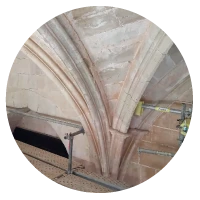
Heritage restoration
The restoration seeks to recover the original state or a specific historical state of the property, restoring its legibility and aesthetic values without falsifying its authenticity. It involves:
- Recovery of degraded elements: Restitution of damaged parts with traditional techniques.
- Elimination of improper additions: Elimination of elements that distort the historical value.
- Visual reintegration: Completing lost parts by differentiating the original from the new.
- Reversibility: Interventions must be able to be removed without damaging the original.
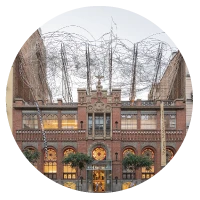
Heritage rehabilitation
The rehabilitation aims to recover the functionality of the building, adapting it to new uses or contemporary requirements without losing its heritage values. It is characterized by:
- Functional adaptation: Incorporation of new facilities and technologies.
- Regulatory compliance: Adaptation to current standards (accessibility, security, efficiency).
- Use compatibility: Balance between historic preservation and new features.
- Sustainability: Integration of energy efficiency and circularity criteria.
Criteria for heritage intervention
The heritage approach is based on fundamental principles that guide each project. It begins by identifying and prioritizing the essential values to be preserved according to their historical, artistic or technical relevance. The selection of solutions and materials is carried out prioritising compatibility with the original elements, avoiding interventions that may cause damage in the medium or long term. It is essential to maintain a clear differentiation between the historic and the new, respecting authenticity without creating false histories that confuse the reading of the building. In addition, improvements are implemented in the durability of the materials, correcting historical pathologies, such as those frequent in Modernism, without altering the original aesthetics that define the character of the heritage asset.
Comprehensive intervention methodology
The rigorous methodology begins with an exhaustive historical-constructive research, meticulously documenting the original techniques and materials used in the building. A complete pathological diagnosis is carried out using advanced non-destructive technologies that allow the causes of deterioration to be accurately identified without compromising the integrity of the heritage. These analyses are complemented by specialized laboratory tests to characterize the original materials and determine the best intervention solutions.
Based on these studies, a gradual plan is developed that includes everything from preventive conservation actions to comprehensive rehabilitation according to the specific needs detected. The entire execution is carried out under specialized construction management, with professionals specifically trained in heritage intervention, ensuring that each decision respects historical values while implementing technically advanced solutions, always in compliance with UNESCO standards and international heritage regulations.
Criteria and regulations in the conservation and restoration of cultural heritage
Intervention in built heritage cannot be carried out arbitrarily, but must be governed by international guidelines and specific regulations that guarantee the protection of its universal values. The criteria established by UNESCO and organizations such as ICOMOS (International Council on Monuments and Sites) constitute the fundamental frame of reference for any responsible action.
These criteria include principles such as minimal intervention, compatibility of materials, reversibility of actions and exhaustive documentation of the entire process. In addition, the Venice Charter, the Krakow Charter and other international documents have established specific guidelines that are mandatory in protected buildings, especially those declared World Heritage Sites.
At SOCOTEC, each project is developed in strict compliance with these regulations, implementing methodologies endorsed by international organizations and complying with the technical and documentary requirements demanded by the competent authorities in the field of heritage, which guarantees not only the legality of our interventions but also their technical excellence and their coherence with the universal values that these assets represent.
Case studies: different approaches according to needs
PORTAL DE LA PAU
Balance between restoration and rehabilitation
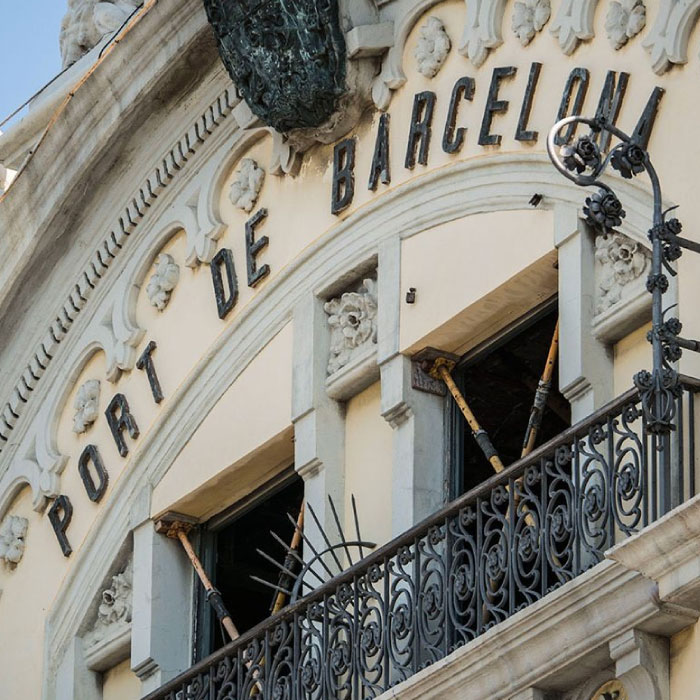
In the historic port building from 1918, a balanced approach has been implemented that responds to its dual value as a heritage element and as a future public space.
The intervention on façades has prioritised the meticulous restoration of the eclectic ornamental elements, recovering the dignity of this urban landmark that connects the city with the sea. At the same time, the interior spaces are being rehabilitated to adapt them as a cultural and informative center, incorporating modern facilities that will allow their new use as a Port Center without compromising the historical structure.
This project perfectly exemplifies how the preventive conservation of structural elements can be combined with new public uses that revitalize heritage.
In the historic port building from 1918, a balanced approach has been implemented that responds to its dual value as a heritage element and as a future public space.
The intervention on façades has prioritised the meticulous restoration of the eclectic ornamental elements, recovering the dignity of this urban landmark that connects the city with the sea. At the same time, the interior spaces are being rehabilitated to adapt them as a cultural and informative center, incorporating modern facilities that will allow their new use as a Port Center without compromising the historical structure.
This project perfectly exemplifies how the preventive conservation of structural elements can be combined with new public uses that revitalize heritage.
LAS GOLFES DE LA PEDRERA
Restoration with authenticity criteria
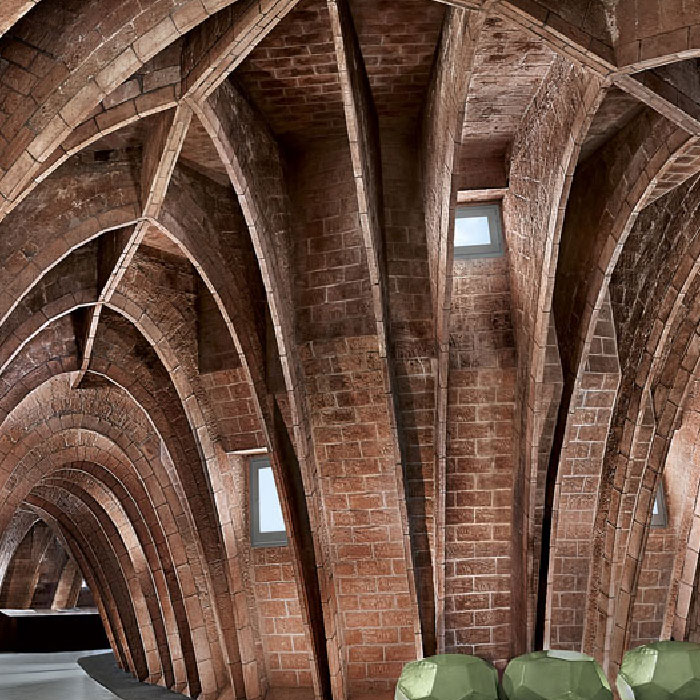
The intervention in this iconic space of Catalan modernism represents a remarkable achievement in heritage restoration.
The project prioritised the exact recovery of the 270 catenary arches, meticulously following Gaudí's original technique. The construction systems were restored using traditional wooden formwork, replicating the artisanal process that gave life to this unique space. Every detail of the modernist design was preserved with absolute fidelity, allowing the Espai Gaudí to transmit the architectural genius of its creator in its entirety.
The recognitions received, such as the ACCA Prize and the National Culture Prize, confirm the success of this approach respectful of historical authenticity.
The intervention in this iconic space of Catalan modernism represents a remarkable achievement in heritage restoration.
The project prioritised the exact recovery of the 270 catenary arches, meticulously following Gaudí's original technique. The construction systems were restored using traditional wooden formwork, replicating the artisanal process that gave life to this unique space. Every detail of the modernist design was preserved with absolute fidelity, allowing the Espai Gaudí to transmit the architectural genius of its creator in its entirety.
The recognitions received, such as the ACCA Prize and the National Culture Prize, confirm the success of this approach respectful of historical authenticity.
HOSPITAL DE SANT PAU
Functional rehabilitation with respect for heritage
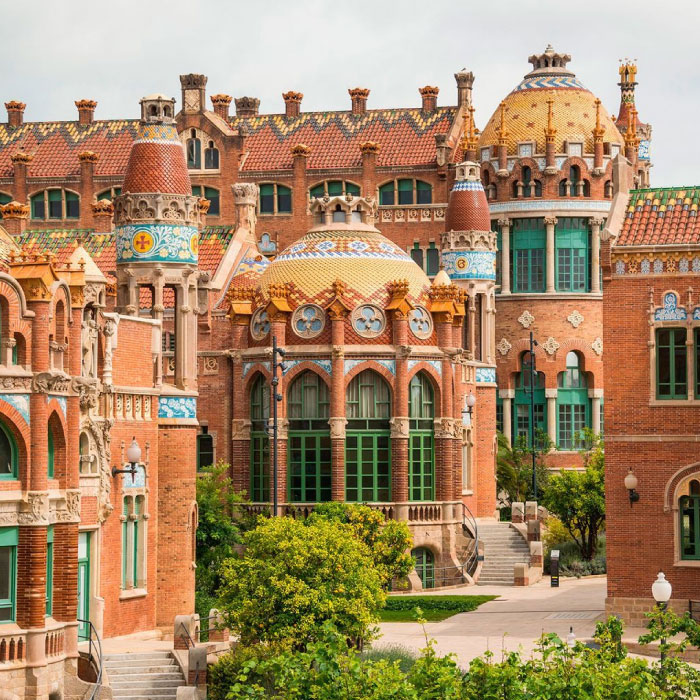
The modernist complex of the Hospital de Sant Pau represented a unique challenge where functional rehabilitation had to coexist with the conservation of an exceptionally valuable heritage.
The adaptation of the hospital pavilions to house new administrative and cultural uses was carried out while keeping intact the extraordinary variety of Catalan-style ceramic vaults that characterise this site declared a World Heritage Site.
The intervention incorporated technical improvements in the original materials to guarantee their future durability without altering their historical appearance, resolving the pathologies of Modernism through contemporary solutions compatible with the century-old structure.
The modernist complex of the Hospital de Sant Pau represented a unique challenge where functional rehabilitation had to coexist with the conservation of an exceptionally valuable heritage.
The adaptation of the hospital pavilions to house new administrative and cultural uses was carried out while keeping intact the extraordinary variety of Catalan-style ceramic vaults that characterise this site declared a World Heritage Site.
The intervention incorporated technical improvements in the original materials to guarantee their future durability without altering their historical appearance, resolving the pathologies of Modernism through contemporary solutions compatible with the century-old structure.
SOCOTEC, EXPERTS in heritage conservation
At SOCOTEC we understand that conservation, restoration and rehabilitation are not watertight compartments but complementary strategies within a comprehensive approach to heritage. Our experience shows that the balance between these perspectives allows the historical authenticity of buildings to be preserved while ensuring their functionality in contemporary contexts. This integration of technical and cultural criteria, always in compliance with UNESCO standards and international heritage regulations, ensures the long-term sustainability of the built heritage, helping to transmit its values to future generations.
Do you have a heritage conservation, restoration or rehabilitation project?
Find out how we can help you preserve the value of heritage by giving it all the security of a new construction.
You might also be interested...



Get the latest updates about SOCOTEC, subscribe to our newsletter !