Self-Protection Plans (PAU): Safety Protocols for Large-Scale Events

Fri 13/02/2026 - 11:27

Safety for Carnivals and Parades

Safety is one of the fundamental pillars of SOCOTEC. In large-scale events, there is no room for improvisation; therefore, Self-Protection Plans (PAU) provide the essential framework for developing robust and detailed protocols.

Through this informative article, the SOCOTEC Health & Safety team demonstrates how they analyze and adapt every point to the specific needs of a particular event—such as carnivals—ensuring that no technical or logistical detail is overlooked to guarantee the integrity of participants and the public.

background dark blue

Need advice?

Send us your details and we will contact you

Contact us

background dark blue

Beyond Regulatory Compliance

Safety Culture

Teresa Cano

"True excellence in an event is measured not only by its visual success or attendance but by the ability to ensure that every participant and spectator returns home safe and sound, and to guarantee that the system remains resilient in the face of any contingency. At SOCOTEC, we transform regulations into an active safety culture."

Teresa Cano, Director of Health & Safety en SOCOTEC

SOCOTEC's commitment: to understand safety not as a bureaucratic restriction, but as the foundation that allows creativity and tradition to shine without risk.

This methodology allows us to turn Self-Protection Plans (PAU) into real management tools that cover every phase of the event, transforming legal standards into practical and secure solutions for municipalities and organizers.

Learn more about Health & Safety

"True excellence in an event is measured not only by its visual success or attendance but by the ability to ensure that every participant and spectator returns home safe and sound, and to guarantee that the system remains resilient in the face of any contingency. At SOCOTEC, we transform regulations into an active safety culture."

Teresa Cano, Director of Health & Safety en SOCOTEC

SOCOTEC's commitment: to understand safety not as a bureaucratic restriction, but as the foundation that allows creativity and tradition to shine without risk.

This methodology allows us to turn Self-Protection Plans (PAU) into real management tools that cover every phase of the event, transforming legal standards into practical and secure solutions for municipalities and organizers.

What is a Self-Protection Plan (PAU)?

A Self-Protection Plan is a document that establishes the organic and functional framework designed for a center, establishment, space, facility, or premises. Its purpose is to prevent and control risks to people and property, ensuring an adequate response to potential emergency situations. In the case of events, it serves as the roadmap that coordinates organizers, public services, and security teams.


Why are Carnival Parades and Local Festivals unique?

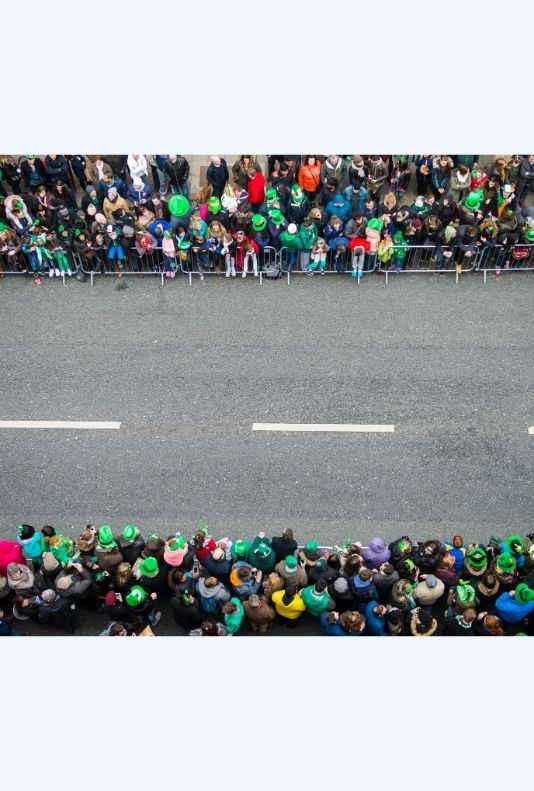
Above any other consideration, the parades held throughout the Catalan territory are quintessential celebrations deeply rooted in the region's cultural tradition. They create an exceptional state and an inversion of the usual order, leading to an exceptionally high gathering of participants and the public on public and private roads and infrastructures. This necessitates the highest possible management of resources in the face of an emergency.

Because there is significant civic participation and current legislation often becomes diluted in these contexts, we establish the following best practice criteria:
 

Best Practice Criteria

  1. All vehicles (cars, tractors, etc.) must have valid insurance and a current vehicle inspection certificate (ITV/MOT) in order.

  2. The driver(s) must hold the appropriate, valid, and up-to-date documentation required to operate the specific type of vehicle.

  3. Only individuals previously registered with the event organizer, who hold a valid driver's license and are covered by the vehicle's insurance, are authorized to drive.

  4. The parade route areas are closed to all unauthorized traffic, although access for emergency vehicles will be maintained at all times.

  5. All drivers must comply with traffic regulations; in this context, the maximum speed limit is set at 10 km/h.

  6. A minimum safety distance of 10 m must be maintained between the vehicle and the following group (comparsa), and no one is permitted to come within 1.5 meters of any moving vehicle or float.

  7. Group participants and the Civil Protection team will assist in ensuring that safety conditions are met for both their own teams and the general public.

  8. The consumption of alcohol or other controlled substances by participants is strictly prohibited during the event.

  1. Smoking is prohibited throughout the entire facility and shall be signposted in accordance with RD 485/1997.

  2. Specific signage must be placed in high-risk areas.

  3. Prepare a maintenance plan for the facilities and communicate it to all users.

  4. Do not store flammable or combustible materials in spaces that are not specifically authorized and equipped for that purpose.

  5. A special hot work permit must be requested from the entity providing the space if the area is not adequately prepared and additional safety measures are required.

  • Ensure that the vehicle clearance (gálibo) is appropriate for the floats to pass freely through municipal streets; therefore, there should be no overhead lines, trees, etc., that limit this clearance. If such obstacles exist, they must be communicated to participants in advance.

  • Insulation of metal structures when in proximity to overhead power lines.

  • All lighting installations must comply with the requirements of the Low Voltage Electrotechnical Regulations (REBT) and its complementary instructions, as well as the DB SUA-4 "Safety against risks caused by inadequate lighting."

  • As a general rule, materials used must be fire-retardant. If decorative materials are not fire-retardant, no open flames (and/or pyrotechnics) may be produced. Furthermore, no sparks or high heat may be generated during construction (the use of cool lighting, such as LEDs, is recommended).

  • Containers of flammable liquids, such as diesel, gasoline, and/or bottles of alcohol, shall not be stockpiled. If necessary, they must be carried in approved containers (jerry cans) and kept off the float itself.

  • When the use of batteries or generators is required, they must be placed in compartments separated from the main cabin and properly protected and insulated from the rest of the space.

  • Float design must include protections to prevent people from approaching the wheels. To achieve this, it is recommended that direct boarding of the floats be restricted and that protective skirts be installed to shield the wheel area from participants and spectators. These skirts must not be rigid, in order to accommodate potential curb cuts or driveways (vados) on public roads.

  • The structure must be designed for rapid evacuation and rescue of persons on board in case of an emergency, while also preventing them from falling while the float is in motion.

  • Design and construction must account for factors such as stability, structural strength, and weight (considering the towing vehicle's capacity), as well as external elements like wind, rain, etc.

  • Access walkways must remain clear of any stockpiled materials or obstructions.

  • Machinery and/or mobile tools must be guarded to prevent impacts or entrapment.

  • Keep the number of people on the float platforms to a minimum.

  • In cases where people remain standing, a perimeter railing at least 1 meter high must be installed to prevent the risk of falls.

  • Access is strictly prohibited to any spaces not specifically designed and calculated to support the weight of persons.

  1. All floats must carry fire extinguishers suitable for the type of fire likely to occur.

  2. Fire extinguishers may only be operated by individuals who are familiar with and trained in their use.

  3. The team leader (jefe de cuadrilla) must be aware of the materials used in the float's construction to properly inform the Intervention Chief in the event of a fire.

  4. Extinguishers on float vehicles must be located in a space that is easily accessible by the driver, the team leader, or the person trained to use them.

  5. It is not recommended to store the extinguisher in the trunk or on the float structure itself, as it may be unreachable if the float catches fire.

  6. A recognized best practice is to use an extinguisher from a nearby float (the one ahead or behind) due to proximity.

  7. In the event of a fire on your float, notify nearby floats so they can stop their activity and, if necessary, shut down their generators, vehicle engines, etc., or even relocate to clear the path for emergency services.

  8. At float crossing points, the same rule applies: floats must not remain clustered together.

  9. In the event of a fire, do not automatically keep the vehicle in motion or drive away, as the airflow could further fan and intensify the flames.

  1. All generators must be in a perfect state of repair and maintenance; it must be verified that users know how to operate them correctly and place them appropriately.

  2. Generators with CE marking should be prioritized, or they must be adapted to RD 1215/1997.

  3. Specific training is required for the operation of this equipment.

  4. Manufacturer instructions must be strictly followed at all times.

  5. Work areas must be kept clean and organized.

  6. When the generator power exceeds 10 kW, a competent technician must prepare a formal installation project.

  7. Before starting work, any potential oil or fuel spills must be cleaned up.

  8. Refueling must only be performed with the engine turned off.

  9. Ensure the grounding connection is secure and periodically check for correct operation; verify that the vehicle, the float, and the generator are all properly grounded.

  10. Combustion exhaust vapors must have sufficient ventilation and exit space.

  11. In the event of a malfunction, the unit may only be repaired by authorized personnel.

  12. The electrical connection or supply must be made using moisture-resistant (heavy-duty) cabling.

  13. No work may be performed near the exhaust pipe.

  14. The supplier or rental company must provide documentation confirming that all relevant periodic inspections have been completed.

In the event that a float catches fire externally:

  • The float must be evacuated immediately in all circumstances.

  • Emergency services must be notified at once.

  • The fire should only be tackled if the individual is trained, knows how to use the extinguishers, and the fire is controllable. It must also be ensured that the costume, makeup, and/or hairstyle of the person fighting the fire is not flammable.

  • Whenever possible, the power generator must be disconnected.

  • Whenever possible, the float platform should be uncoupled from the towing vehicle.

  • The float should be positioned in the center of the street to minimize the impact on neighboring buildings.

  • The group of participants (comparsas) accompanying the float must form a perimeter (cordon) to ensure that no one approaches the vehicle.

  • Nearby groups (those in front, behind, or at crossing points) must be informed so they can immediately halt their activity.

  1. Do not park vehicles along the parade routes.

  2. Residents with garages located along the route will not be able to enter or exit with vehicles during the scheduled parade hours.

  3. Keep doors and windows closed, shutters down, and awnings retracted. Avoid leaving laundry hanging outside or other textile elements exposed.

  4. Remove tables, chairs, umbrellas, planters, and any other objects located on public roads.

  5. Dispose of waste in designated containers and/or keep it away from the parade route.

Can we help you?

Our Health & Safety division does not only specialize in events but also provides a comprehensive safety culture through the following services:

  • Health and Safety Coordination on construction sites

  • Technical Assistance in Prevention

  • Compliance Audits

  • Specialized Training for workers

  • Technical Consultancy in occupational risks

We have first-hand knowledge of the challenges faced by developers and construction companies, adapting our services to provide safety at every level of the project.

At SOCOTEC, our commitment is to bring Safety Culture to every corner of society, from large-scale infrastructures to the celebrations that define our culture.

background dark blue

Need advice?

Send us your details and we will contact you

Contact us

Associated keywords

background dark blue

Get the latest updates about SOCOTEC, subscribe to our newsletter !