
Article written by

How hybridization is changing PV plants
Wed 25/03/2026 - 12:08
The hybridization of photovoltaic plants through battery storage systems has established itself as a strategic solution to improve the efficiency and reliability of the renewable electricity supply.
Solar energy has an intrinsic variability, with production concentrated in the hours of irradiation, generating temporary mismatches between supply and demand. The incorporation of battery systems makes it possible to extend energy availability and facilitate integration into the electricity grid.
This approach is becoming increasingly important both in Spain and internationally.
The National Commission on Markets and Competition (CNMC) identifies the saturation of grid infrastructures as one of the main obstacles to photovoltaic expansion.
In this context, photovoltaic-battery hybridization emerges as a fundamental strategy to maximize installed capacity without compromising the stability of the electricity system.


Strategies that turn energy into profitability
The efficiency of hybridized plants depends critically on the loading and unloading strategies implemented, based on two complementary operational concepts.
The first is based on temporary arbitrage by charging in off-peak periods, consisting of recharging the batteries during periods of low demand or reduced tariffs, mainly during night hours, to subsequently use that stored energy at a lower cost at higher price hours, thus optimising operational profitability by taking advantage of hourly tariff differences.
The second approach focuses on dynamic demand response, synchronizing battery discharge with periods of high demand and high electricity market prices. This active management generates additional revenue by responding directly to critical system needs, requiring advanced predictive capabilities to determine the optimal moments of energy release into the grid.
"The hybridization of photovoltaic plants is a technically feasible response to grid infrastructure constraints, simultaneously optimizing energy management and system stability."
The effectiveness of these strategies is enhanced by automated control systems. Energy management algorithms, based on predictive methods, artificial intelligence or mathematical programming, calculate optimal operating profiles.
These systems integrate solar generation forecasts, demand forecasts, and market price predictions, allowing the hybrid plant to dynamically adapt to environmental conditions and maximize both profitability and reliability of supply.
HYBRIDIZATION
What does the hybridization of a photovoltaic plant consist of?
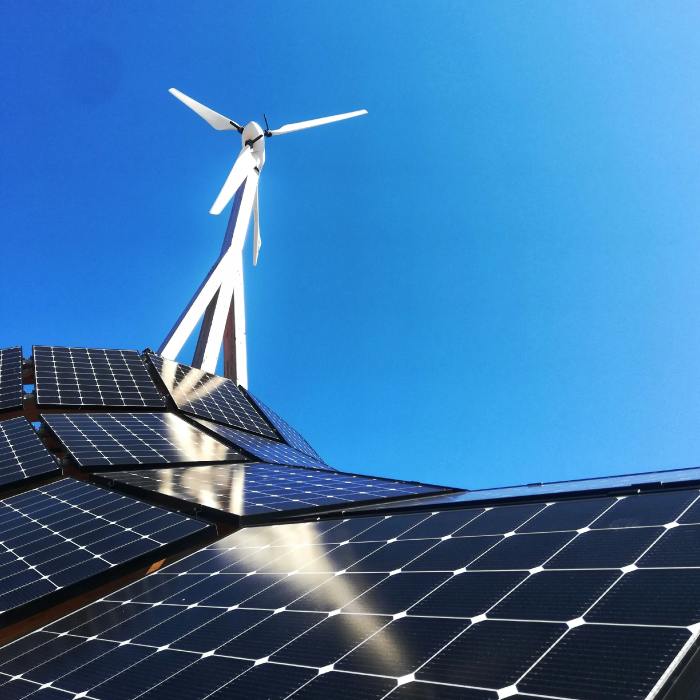
The hybridization of photovoltaic plants consists of the integration of energy storage systems, usually lithium-ion batteries, with existing or newly built solar generation facilities.
This technical concept involves combining two or more energy sources or technologies at the same point of connection to the electricity grid, allowing the energy generated during the hours of maximum solar irradiation to be stored and subsequently discharged according to the needs of the electricity system or market conditions.
Hybridization can also include the combination of photovoltaic energy with other renewable sources such as wind, or with conventional generation, creating energy systems that are more flexible, resilient and capable of providing electricity supply continuously, thus overcoming the intermittency characteristic of renewable energies.
You need help in PV plant hybridization consulting
The hybridization of photovoltaic plants consists of the integration of energy storage systems, usually lithium-ion batteries, with existing or newly built solar generation facilities.
This technical concept involves combining two or more energy sources or technologies at the same point of connection to the electricity grid, allowing the energy generated during the hours of maximum solar irradiation to be stored and subsequently discharged according to the needs of the electricity system or market conditions.
Hybridization can also include the combination of photovoltaic energy with other renewable sources such as wind, or with conventional generation, creating energy systems that are more flexible, resilient and capable of providing electricity supply continuously, thus overcoming the intermittency characteristic of renewable energies.
You need help in PV plant hybridization consulting
The effectiveness of these strategies is enhanced by automated control systems. Energy management algorithms, based on predictive methods, artificial intelligence or mathematical programming, calculate optimal operating profiles.
These systems integrate solar generation forecasts, demand forecasts, and market price predictions, allowing the hybrid plant to dynamically adapt to environmental conditions and maximize both profitability and reliability of supply.
Regulation in transition: the key challenge for the sector
The current regulatory framework presents significant inconsistencies that hinder the efficient implementation of hybrid PV plants. Grid connection regulations, developed prior to the rise of distributed storage, do not adequately account for the complex bidirectional energy flows characteristic of these systems. This situation generates legal uncertainty for developers and investors.
Administrative authorization procedures require substantial updates. Environmental impact assessments and evacuation studies should incorporate new parameters linked to storage, including battery end-of-life management, electrochemical safety protocols and circular economy obligations. These extended administrative processes significantly increase development times and associated costs, discouraging the adoption of hybrid solutions.
In addition, although these facilities can provide valuable auxiliary services to the electricity system such as frequency regulation, voltage control or power reserve, the mechanisms for remuneration for such services remain insufficiently developed. This regulatory gap prevents operators from fully monetizing the added value of their facilities.
SOCOTEC, experts in photovoltaic park consulting
The hybridization of photovoltaic plants is a technically feasible response to grid infrastructure limitations, simultaneously optimizing energy management and system stability. Its effective deployment requires a comprehensive approach that considers not only the technical-economic aspects, but also the development of an updated regulatory framework that generates confidence in the sector.
In this context, SOCOTEC is positioned as a strategic partner for developers and operators of hybrid plants, offering specialized engineering services that allow the design and processing of the hybridization of existing photovoltaic plants.
We help you in your photovoltaic plant hybridization project
You might also be interested...

Get the latest updates about SOCOTEC, subscribe to our newsletter !