Descontaminación de suelos

Environmental geotechnical and soil decontamination services

At SOCOTEC, we offer comprehensive solutions for environmental geotechnics and soil decontamination, helping companies overcome complex environmental challenges.

Specialists in the prevention and remediation of soil contamination

Our environmental geotechnical and soil decontamination services  are designed to support companies in the resolution of administrative files, risk assessment and the implementation of decontamination plans, always complying with all current regulations.

From initial assessment to implementation of remediation plans, we provide an effective and tailored approach to ensuring regulatory compliance and environmental recovery of affected land.

We specialize in the investigation, evaluation, and remediation of soil and groundwater contamination. We have a highly qualified team and advanced technology to offer customized and effective solutions in the environmental management of contaminated soils.

Comprehensive solutions in geotechnics and soil decontamination

At SOCOTEC, we offer complete solutions tailored to each client's needs to manage environmental challenges related to soil and groundwater contamination. From the resolution of administrative files to the execution of decontamination plans, we work to guarantee the environmental recovery of the affected land and compliance with all current regulations.

Our services include:

Nos encargamos de gestionar expedientes de contaminación y descontaminación ante las autoridades, asegurando la correcta resolución del proceso administrativo.

Elaboramos Informes Preliminares, Informes Base, Informes de Cese de Actividad, Informes Periódicos y otros documentos necesarios para la renovación de licencias ambientales.

Realizamos auditorías del estado del subsuelo en procesos de compraventa industrial o ampliaciones de instalaciones.

Evaluamos el impacto de la contaminación de suelos y aguas subterráneas en operaciones de compraventa de terrenos y la adquisición de propiedades industriales.

Ejecución de sondeos, instalación de piezómetros y análisis de suelos y aguas subterráneas, cumpliendo con el RD 9/2005.

Todos nuestros análisis están certificados bajo la norma ISO 17025, garantizando la fiabilidad y calidad de los resultados.

Elaboramos análisis de riesgo para la salud humana y el medio ambiente en situaciones de contaminación, asegurando que los impactos sean gestionados adecuadamente.

Redacción y ejecución de planes de remediación adaptados a cada caso, para restaurar la calidad del suelo y las aguas subterráneas.

Diseñamos y gestionamos programas de seguimiento ambiental para monitorizar la evolución de las contaminaciones.


Quality assurance and regulatory compliance

SOCOTEC is officially authorised as Control Entities in the Sectoral Field of Soil Pollution Prevention (EC-SOL), granted by the General Directorate of Climate Change and Environmental Quality of the Department of Territory, Habitat and Ecological Transition of Catalonia.

We have accreditation number 139-EC-SOL, which guarantees our capacity and competence in the following subfields:

  • Research (I)
  • Quantitative Risk Analysis (AQR)
  • Decontamination Projects (DP)


SECTOR

Industrial
Descontaminación de suelos

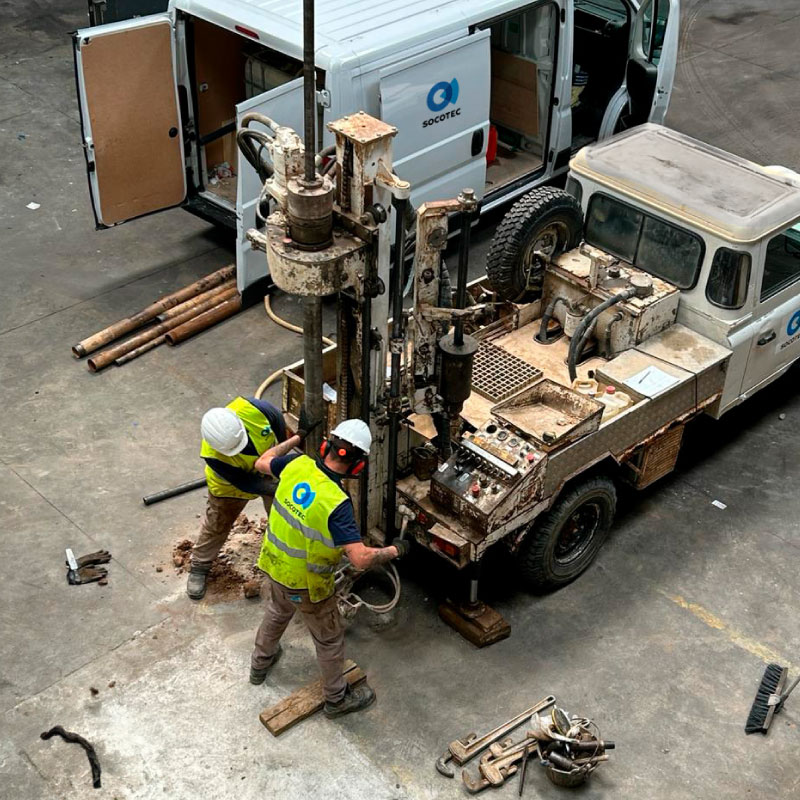
In the industrial sector, we offer tailored solutions to manage soil and groundwater pollution, helping companies comply with environmental regulations and manage the risks associated with their facilities.

Situation reports:

  • Base Report
  • Preliminary Status Report
  • Cessation of Activity Report
  • Periodic and other reports according to regulations

Administrative requirements:

  • Environmental Licenses
  • Sale and Purchase and Environmental Due Diligence
  • Environmental Accident Management
  • Decontamination Plans


SECTOR

Construction
Descontaminación de suelos

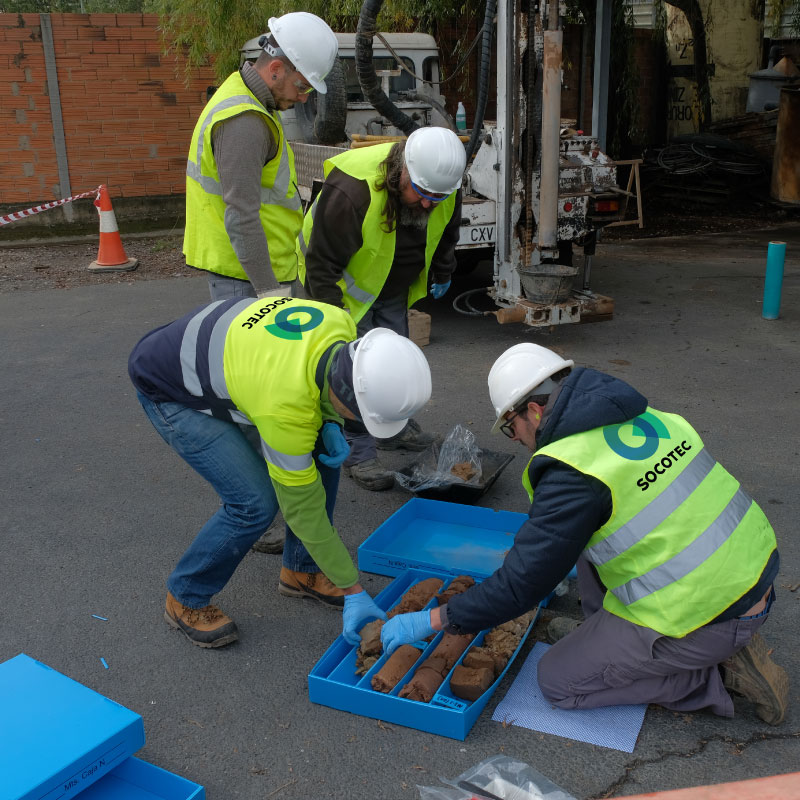
We offer specialized services in the evaluation and remediation of soils for construction projects, ensuring that current regulations are complied with and risks to public health and the environment are minimized.

Specific services:

  • APC (Potentially Polluting Activity): Compliance with Order PRA/1080/2017 for the identification of activities with polluting potential.
  • Land Use Change: Assessment and remediation for land use change from industrial to residential, especially in cases with suspected contamination.


SOCOTEC: innovation in geotechnical studies and soil decontamination

At SOCOTEC, we combine experience, innovation and technology to offer advanced solutions in environmental geotechnics and soil decontamination.

  • Experience and commitment: We have a highly qualified team in constant training.
  • Innovation: We adapt to the latest technologies in the sector to guarantee efficient solutions.
  • Technology: We use state-of-the-art equipment to obtain accurate and reliable results.
  • Specialisation: We design tailor-made solutions for each client, ensuring a personalised and effective approach.


Contact us and take the first step towards environmental development.

We are the ideal ally to optimize the environmental management of contaminated soils, guaranteeing the success of each project.

Frequently asked questions about environmentalgeotechnics

Geotecnia Marina
01 / 05

Environmental geotechnics studies the interaction between soil, groundwater and pollutants to assess risks and ensure the stability and sustainability of the land. It allows the design of safe solutions that minimise environmental impact in construction or industrial projects.

Soil decontamination involves identifying, analysing and eliminating or isolating the contaminants present in a field using physical-chemical, biological or confinement techniques. Its objective is to recover the functionality and environmental safety of the affected site.

A soil can be contaminated by hydrocarbon leaks, industrial discharges, improper use of chemicals or poor waste management. These agents alter its natural properties and can affect the quality of water and nearby ecosystems.

It is the technical study that allows determining the presence, nature and concentration of possible contaminants in soil and groundwater of a site. Its objective is to assess whether the conditions of the land can be considered altered or contaminated, in accordance with the criteria established in Royal Decree 9/2005, and to serve as a basis for defining the necessary management or remediation measures.

It must be carried out by those companies or owners of facilities whose activities are considered potentially soil pollutants, according to Royal Decree 9/2005 and Order PRA/1080/2017 . The objective is to check whether the operations carried out have been able to affect the subsoil or groundwater of the site.

The characterization of the subsoil should be carried out in all those sites where Potentially Polluting Activities (APCs) of the soil have been or are being developed.

A large part of historical and current industrial activities have made and continue to make use of compounds that, once released into the subsoil, can pose a risk to human health and/or ecosystems.

Within the framework of these activities, historically, inadequate waste management and/or environmental accidents have occurred, causing an impact on the soil and/or groundwater. At present, even though there is a much deeper environmental awareness, no facility is exempt from the occurrence of incidents that can potentially affect the quality of the subsoil.

According to RD 9/2005 "those whose characteristics have been negatively altered by the presence of chemical components of a dangerous nature from human activity, in such a concentration that it entails an unacceptable risk to human health or the environment".

A set of methodologies aimed at the elimination, reduction and/or stabilisation of polluting compounds present in soils and groundwater.

Prior to the selection and design of the restoration technique, the following phases must take place:

  • Detailed characterization of the subsoil of the site.
  • Carrying out pilot tests of the selected techniques.
  • Design and implementation of the most appropriate methodology.
  • Follow-up of the remediation process.
  • Final verification of remediation.
  • Post-remediation monitoring of the subsoil.

There are different methodologies for subsoil remediation, among which the following stand out:

  1. Excavations: Extraction of contaminated soil for management/recovery as waste.
  2. In situ chemical oxidation: application of oxidizing agents in the underground environment with the aim of degrading the contaminants present in it.
  3. Bioremediation: methodology based on the activity of microorganisms present in the underground environment capable of degrading pollutants naturally.
  4.  Vapour extraction: system for the forced extraction of vapours from the subsoil and the treatment of these.
  5.  Pumping and treatment: pumping of the affected groundwater and subsequent treatment of the same.
  6.  Monitored natural attenuation: monitoring of the natural processes that take place in the subsoil that contribute to reducing the concentrations of the pollutants present.

It is the process of numerical evaluation of various parameters through which the risks that the presence of polluting compounds in the subsoil may pose to human health and ecosystems are studied, analyzed and characterized.

ANNEX IV of RD 9/2005 establishes the criteria for the identification of soils that require risk assessment, whether for human health or ecosystems, affecting those that meet the following conditions:

  1. That have concentrations of total petroleum hydrocarbons greater than 50 mg/kg.
  2. There is analytical evidence that the concentration of any of the substances listed in Annex V exceeds the generic reference level corresponding to its current or planned use.

Recognition granted by the Office of Habilitation of Collaborating Entities (OHEC) of the Generalitat de Catalunya that trains an entity and its technical staff to carry out the functions as a Control Entity (CE) in the sectoral field of soil pollution prevention (SOL) in the autonomous community of Catalonia.

SOCOTEC has this authorization for the fields of action of Research, Quantitative Risk Analysis and Decontamination Projects.

According to the National Accreditation Entity (ENAC) "accreditation is the internationally established tool  to generate confidence in the correct execution of conformity assessment activities, allowing to differentiate between bodies that have demonstrated the necessary technical competence to carry them out and that offer reliability in their results from those that have not demonstrated it".

Currently, SOCOTEC is in the process of obtaining the UNE EN ISO/IEC 17020:2012 Accreditation  for Inspection Entities in the field of soils and associated groundwater and soil gases granted by the national accreditation body.

Soil remediation or decontamination is the set of techniques and actions aimed at eliminating, reducing or stabilising the contaminants present in soil and groundwater. Its objective is to restore the safe environmental conditions of the site and ensure that its future use does not pose a risk to human health or ecosystems.

  • Excavations: Extraction of contaminated soil for waste recovery or application of specific treatments to reduce the impact
  • In situ chemical oxidation: Introduction of oxidizing agents into the underground environment, mainly in groundwater, to degrade contaminants present in aquifers
  • Bioremediation: Enhancement of microorganisms present in the underground environment through nutrients so that they degrade pollutants naturally
  • Vapour extraction: System for forced extraction of contaminated vapours from the subsoil, treatment by means of activated carbon filters and return to the environment

It is a technical assessment that determines the possible exposure of people to contaminants present in soil or groundwater. It allows the quantification of health risks and the definition of corrective or environmental management measures appropriate to the intended use of the land.

ENAC's EC-SOL accreditation  certifies the technical competence of entities that carry out investigations and evaluations of potentially contaminated soils. It guarantees that the procedures applied comply with the quality standards and regulatory requirements established by Spanish environmental legislation.

According to the APC (Potentially Polluting Activity) PRA/1080/2017,  land with the following activities must comply with the regulations: Mining and manufacturing, Chemical industry, Coke plants and oil refining, Prepress services and preparation of supports, Intensive agriculture and livestock, transport and storage of hydrocarbons.

It must be carried out when there is a change in land use or when the activity carried out is included among the Potentially Polluting Activities (APCs) defined in Order PRA/1080/2017. This analysis makes it possible to verify the environmental status of the site and prevent risks to health or the environment.

SOCOTEC acts as an accredited entity for research, risk analysis and soil decontamination projects, offering comprehensive solutions that guarantee regulatory compliance, environmental safety and technical traceability of the process.

Direct reference to RD 9/2005, Law 7/2022 and Order PRA/1080/2017, key to demonstrating rigour and technical authority.

It allows explaining the regulatory thresholds between alteration and contamination according to RD 9/2005 and avoids common confusions.