
geotecnia fotovoltaica

Photovoltaic geotechnics: Specialized services for solar energy projects

Specialists in geotechnics for photovoltaic parks

At SOCOTEC, we are leaders in the geotechnics sector for photovoltaic parks, with over 12 years of experience and more than 300 completed projects.

Our team of experts offers comprehensive 360º Engineering services, ensuring the solidity and durability of solar infrastructures through accurate and reliable geotechnical studies.


Geotechnical services for photovoltaic projects

We carry out a wide range of specific geotechnical tests and studies to guarantee the viability and stability of solar plants:

Specialized geotechnical testing:

They determine the electrical and thermal conductivity of the soil, essential for designing grounding systems and heat dissipation efficiency in metal structures.

They evaluate the load capacity of the soil and its mechanical properties at different depths, providing key information for the design of foundations.

Allows the identification of possible obstructions in the subsoil, such as rocks, cavities or pipes, ensuring efficient planning of the infrastructure.

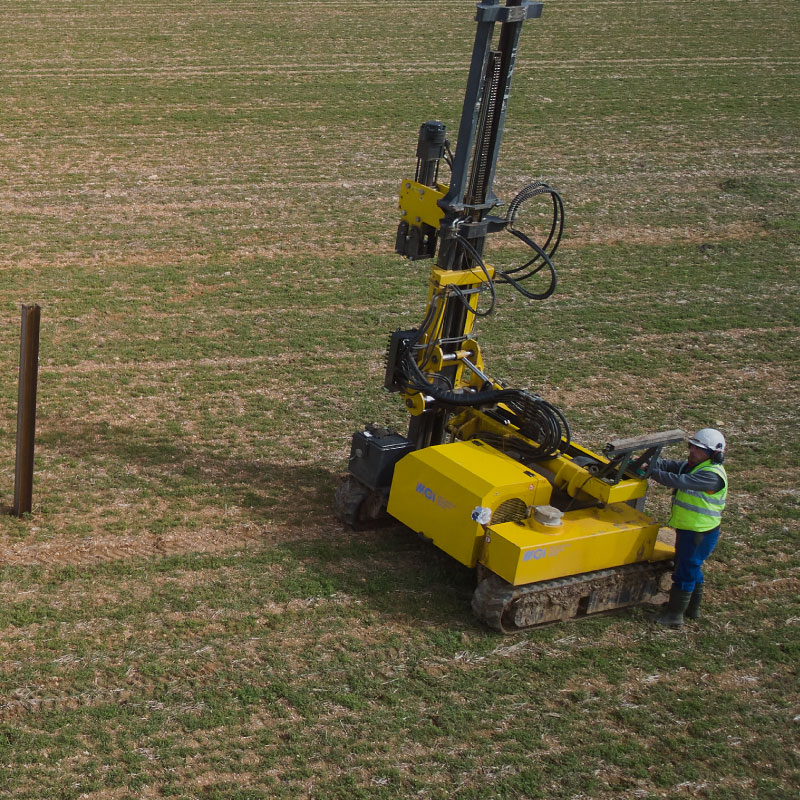
Determine the pull-out strength of the anchor profiles used in solar panel supports.

They analyze the capacity of the ground to allow the installation of piles without affecting structural stability.

We evaluate the impact of corrosion on buried metal materials exposed to the environment to anticipate and mitigate risks.

They characterize the soil conditions before the execution of the project, providing fundamental data for its feasibility.


Advanced technologies for soil study

  • Drone surveying: High-precision geospatial data capture for digital terrain modeling.
  • Topographic survey with GPS station: Obtaining georeferenced coordinates for a detailed and accurate design of solar installations.

Hydrological studies

Hydrological studies are essential to evaluate the effects of water on photovoltaic plants. SOCOTEC analyzes the hydrology of the terrain to foresee possible drainage and erosion problems, ensuring an infrastructure resistant to climatic and environmental conditions.

 

CORROSIVITY

Ground and atmospheric corrosivity tests
geotecnia fotovoltaico

Ground and atmospheric corrosivity tests

Corrosivity of the ground

The analysis of  ground corrosivity is key to determine the impact of the soil on metal foundations. SOCOTEC evaluates factors such as conductivity, humidity, pH and contaminants, classifying the corrosivity according to DIN 50929-3.

Atmospheric Corrosivity - Wire-on-Bolt Test

SOCOTEC uses the Wire-on-Bolt test to measure environmental corrosivity in metal structures. The methodology is based on the mass loss of metal samples exposed to different climatic conditions, allowing the aggressiveness of the environment to be classified.

PULL-OUT TESTING

Extraction Test
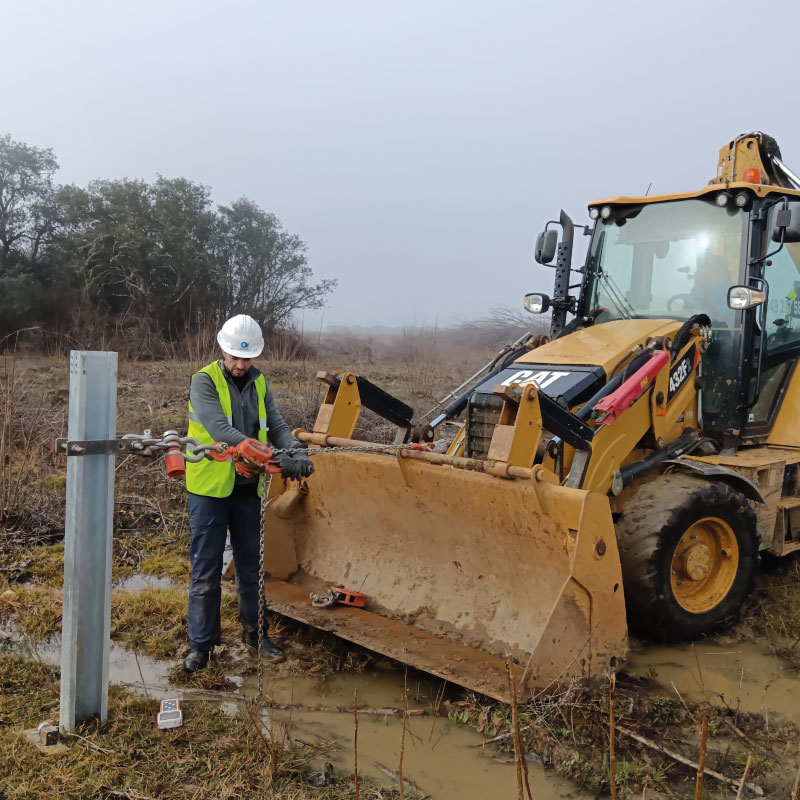
Pull-Out Testing is a key test in photovoltaic geotechnics, designed to evaluate the strength and behavior of anchor profiles used in solar panel support structures.

How is Pull-Out Testing performed?

This test consists of applying a controlled force on the piles previously installed on the ground. Specialized equipment is used to measure the vertical and horizontal deformations that occur when the poles are subjected to progressive extraction and compression loads. The results obtained allow us to determine the capacity of the ground to resist external forces and guarantee the structural stability of the photovoltaic installation.

At SOCOTEC, we apply advanced methodologies and state-of-the-art equipment to perform Pull-Out Testing with the utmost precision, ensuring that the foundations of solar plants are safe and durable.


Other Engineering Services for photovoltaic parks

In addition to our geotechnical studies for photovoltaic parks, we offer a comprehensive service for solar parks:

Consulting

  • Preliminary studies and preliminary projects
  • Mechanical, structural and electrical audit
  • Consultancy: Processing of permits and licenses

Infrastructure engineering:

  • Execution projects (civil, mechanical, electrical and control works)
  • Construction management and health and safety coordination

Learn more about our consulting and engineering services for photovoltaic parks at this link.

Why choose SOCOTEC?

At SOCOTEC, we differentiate ourselves by our extensive experience and specialization in geotechnics for photovoltaic parks.

We have a team of highly qualified geologists and engineers, our own machinery, and advanced technology to guarantee accurate and efficient results.

Our ability to adapt to international regulations, together with our work methodology based on excellence and safety, makes us the ideal partner for the success of your solar project.


Request our geotechnical services for photovoltaic parks

With SOCOTEC, you ensure the reliability and durability of your photovoltaic system.

Frequently asked questions about photovoltaic geotechnics
fotovoltaica
01 / 03

Photovoltaic geotechnics is the branch of geotechnical engineering that analyzes the characteristics of the terrain to determine the feasibility and design of a solar park. Its objective is to evaluate how the floor will behave in front of the structures that support the panels, guaranteeing the stability, safety and durability of the installation.

Geotechnics in photovoltaic projects are essential to ensure that the land is suitable to support the solar panel structures throughout the useful life of the park. A well-conducted geotechnical study optimizes structural design, reduces construction risks and allows safer and more cost-effective solutions to be chosen.

Pull Out Testing is a geotechnical field test that allows the evaluation of the anchoring capacity and the response of the ground to tensile stresses. It can be carried out in the pre-construction phase, to validate the design and expected behavior of the structures, or during the execution of the project, as part of the quality control. The test determines the strength-strain ratio of the ground until the point of failure or limit deformation is reached.

In photovoltaic projects, this test is key to ensuring the useful life of the installation and foreseeing possible pathologies.

Hydrological studies are technical analyses that evaluate the behavior of water in a given area, considering factors such as runoff, infiltration, and drainage. In photovoltaic projects, they are essential to define the design of the work, prevent flood risks and ensure sustainable water management on site.

The ground corrosivity analysis determines the corrosive potential of the soil compared to galvanized coatings of metal structures. It is carried out in accordance with DIN regulations, based on the results of the tests carried out on samples taken in situ. This study is essential to guarantee the durability of the foundations and ensure the expected useful life of the photovoltaic installation.

The atmospheric corrosivity test, or Wire-on-Bolt test, evaluates the corrosive potential of the environment on different metals. It is carried out following the ASTM G116 standard  and allows the determination of galvanic corrosivity and aggressiveness of the environment where the installation will be located. The method consists of exposing metal samples such as steel, aluminum or copper for a controlled period, to then analyze the speed and type of corrosion developed.

This type of test is especially relevant in areas with large seasonal environmental variations or in those where there are no maps or bibliography on atmospheric corrosivity available.

The metal structures of photovoltaic parks must primarily comply with DIN 50929-3 for the evaluation of corrosion of buried steel, as well as with ASTM G116 for atmospheric corrosivity. These regulations make it possible to determine the type of corrosion and define the most appropriate coatings or protection systems to ensure the useful life of the installation.

DIN 50929-3 is a German standard that sets out the procedures for assessing the likelihood of corrosion in buried or submerged metal components, such as PV panel support structures. It analyzes parameters such as soil composition and moisture, the presence of salts, the type of construction and the extension of the installation. Its objective is to classify the aggressiveness of the environment and define the necessary protection measures to guarantee the durability of galvanized steel.

Before building a photovoltaic park, geotechnical studies are carried out to characterise the terrain and define the most suitable foundation solutions. These include the investigation of the subsoil through in situ and laboratory soundings and tests, with the aim of determining the stratigraphy, bearing capacity, water table and stability conditions of the soil.

In photovoltaic geotechnics, mechanical soundings with sample recovery, dynamic and static penetrometers (SPT, DPSH, CPT), and laboratory tests on the samples obtained are mainly used. These include the tests of Atterberg limits, granulometry, density, shear strength and compactness, which allow the geotechnical parameters necessary for the design of the foundations to be defined.

Knowing the bearing capacity of the ground is essential to ensure that photovoltaic structures transmit loads to the ground without causing excessive settlements or stability failures. This parameter determines the most appropriate type and depth of foundation, optimizing both structural safety and execution costs.

The risk of corrosion in photovoltaic structures depends mainly on the moisture of the soil, the presence of salts or sulfates, the pH, the electrical conductivity of the soil and the local atmospheric conditions. Construction factors also play a role, such as the quality of the galvanizing, the type of joint between different materials or the lack of drainage in areas with water accumulation.

Atmospheric corrosion is caused by the exposure of metals to air and humidity, especially affecting the elevated parts of the structure. Ground corrosion, on the other hand, occurs in elements buried or in contact with the ground, where parameters such as chemical composition, salt content, pH and electrical resistivity are influential. Each type requires specific tests and protection measures.

In Spain, geotechnical studies are mainly governed by the Structural Code RD 470/2021 and the UNE 103800 Standard, which establish the criteria for the investigation of the terrain and the dimensioning of foundations. In addition, complementary standards such as UNE-EN ISO 14688 (classification of soil characteristics) and DIN and ASTM standards related to corrosion and material testing can be applied.

An exhaustive geotechnical study allows the design of foundations to be optimised, reducing the risk of structural failure and minimising construction costs. It facilitates decision-making in the project phase, avoids unforeseen events during execution and guarantees the durability and safety of the photovoltaic installation in the long term.