
La Casa de les Lletres: sustainability consultancy for the Palau Requesens rehabilitation
- Client: Brullet de Luna i Associats SLP + Taller d’Arquitectura a les Golfes
- Location: Barcelona
- Years: 2025-2028
Sustainability consultancy for the rehabilitation of Palau Requesens
The iconic Palau Requesens in Barcelona, a medieval building protected as a Cultural Asset of National Interest, is preparing for a historic transformation.
By 2028, this space will be reborn as the Casa de les Lletres, a cultural hub that will house the Institució de les Lletres Catalanes (ILC) and various organizations from the literary sector.
SOCOTEC has joined this project —designed by Brullet de Luna i Associats SLP and Taller d’Arquitectura a les Golfes— under the GREEN TRUST framework. This service line, based on the six objectives of the EU Taxonomy, provides our specialized environmental consultancy to elevate a 14th-century asset to the sustainability standards of BREEAM certification.

Talk to our experts


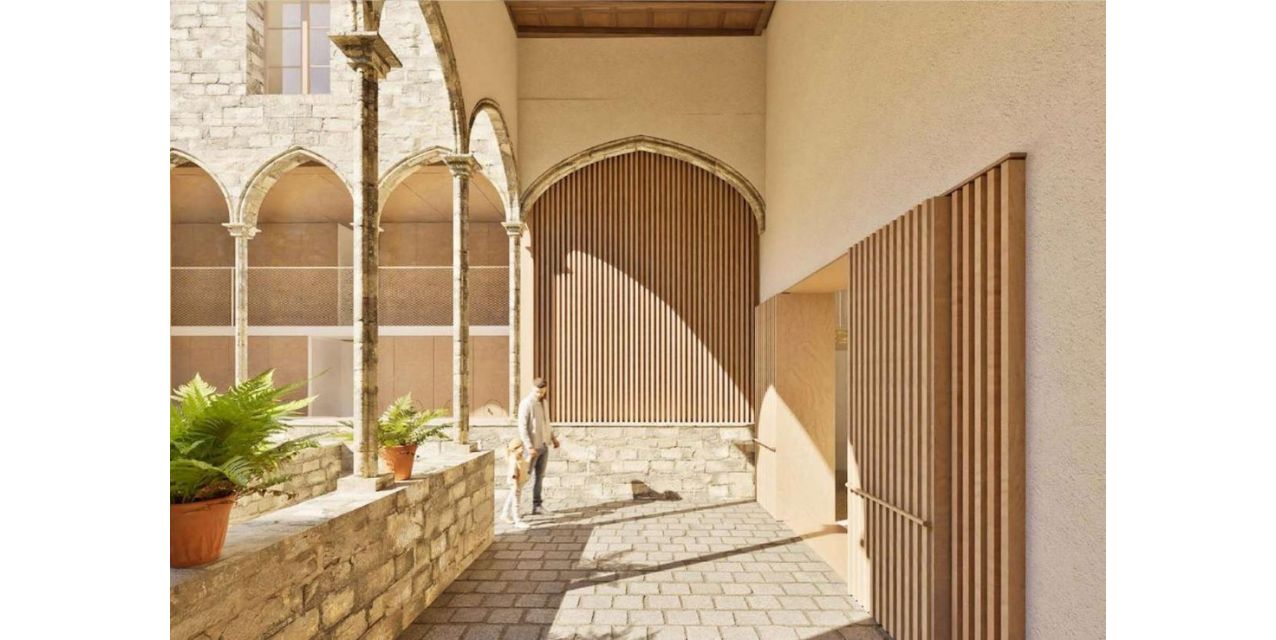
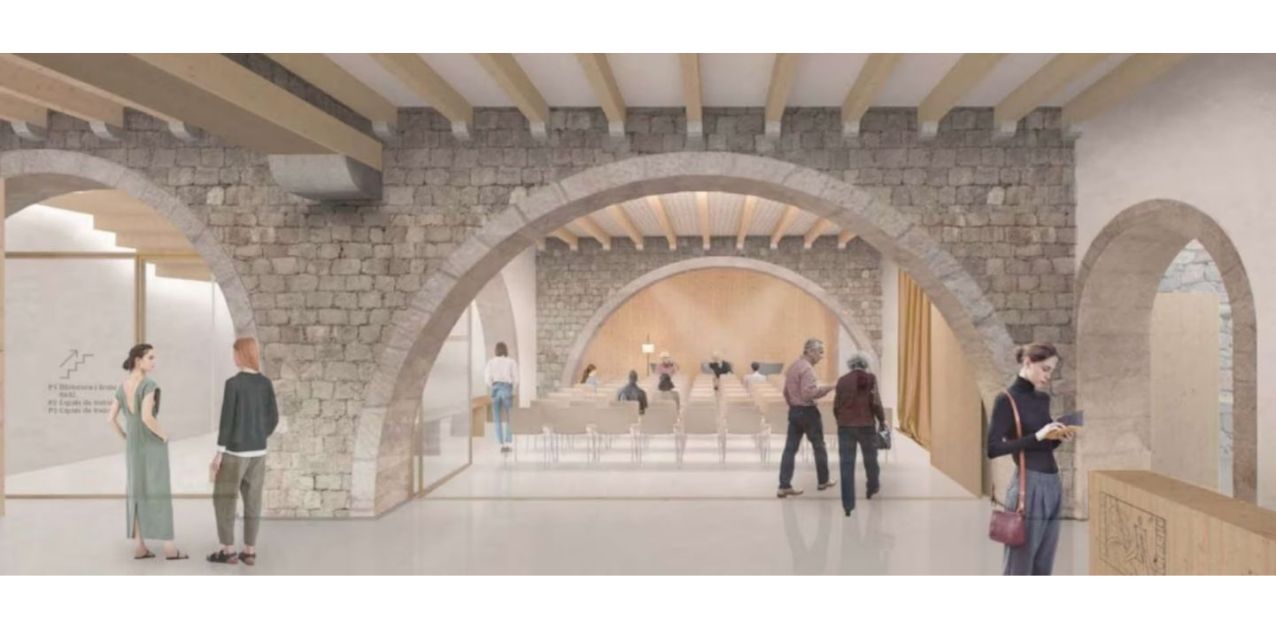
A project uniting historical heritage and a sustainable future
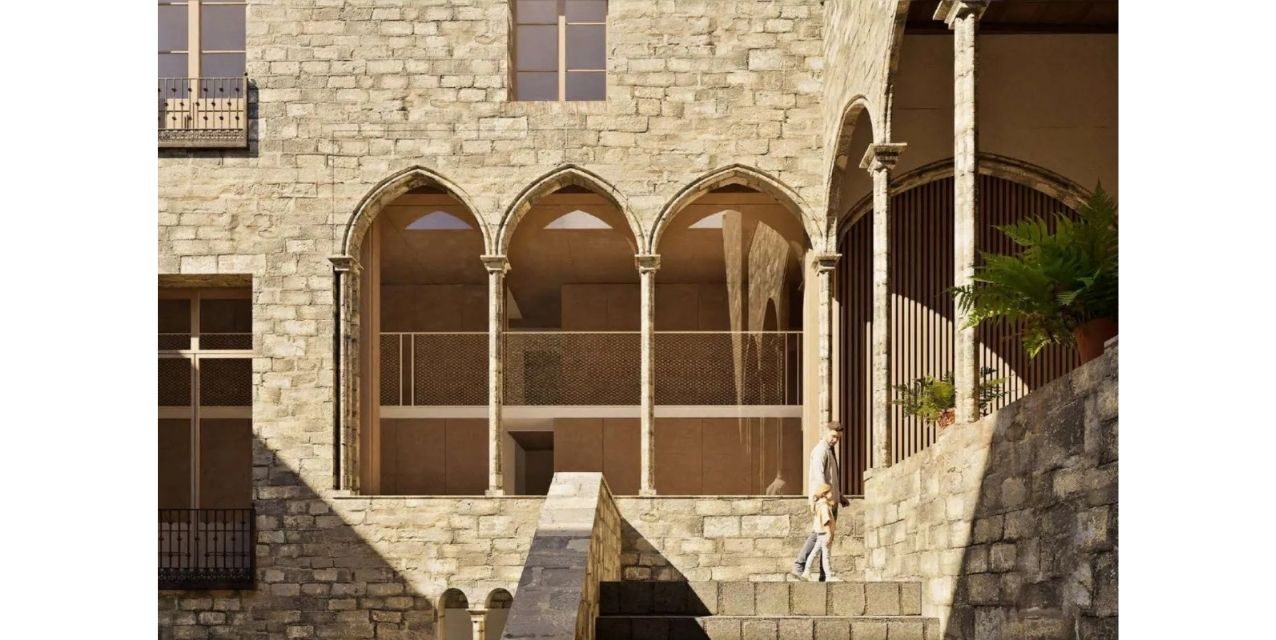
The rehabilitation of Palau Requesens seeks to adapt the monument for new administrative and public uses without altering its Gothic and Neoclassical essence. While the architectural design prioritizes natural light and passive efficiency, the SOCOTEC team is integrated into the project providing the GREEN TRUST expertise. Our specialization in environmental consultancy ensures that the intervention meets the sustainability standards of BREEAM certification.
Sustainability strategies
Building spatial organization
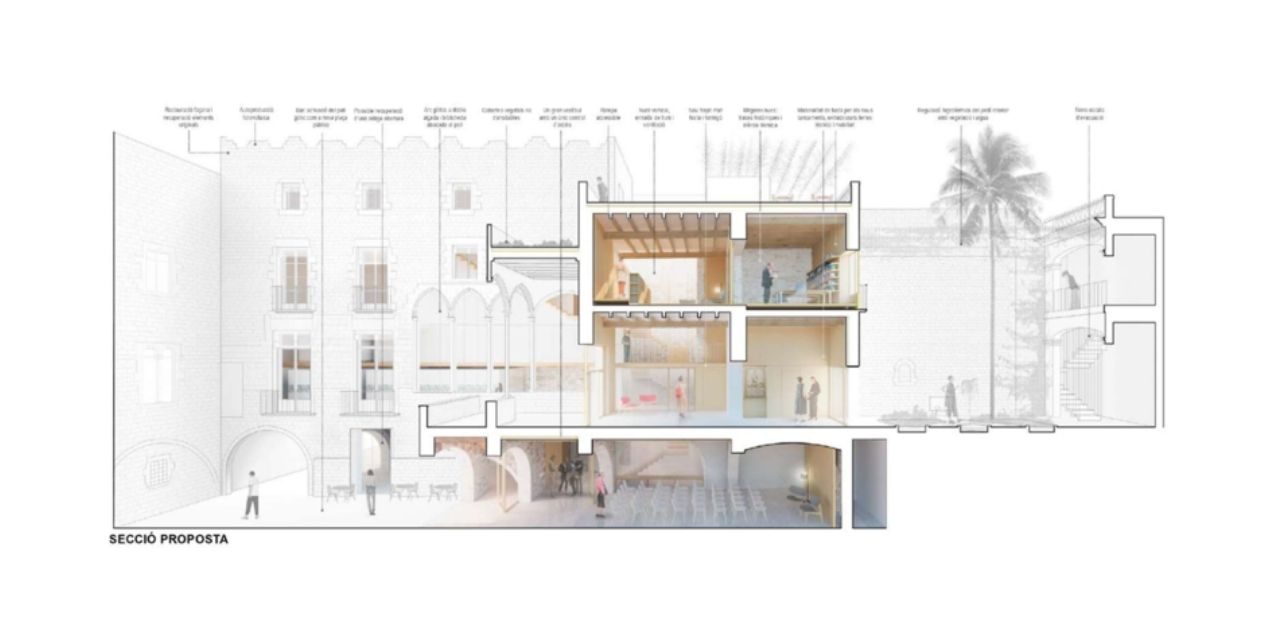
The design organizes the Palau to be a living space, aligned with the global decarbonization goals for 2050:
Ground Floor – The public heart: It will house a multipurpose hall and a café in the Gothic courtyard. The reopening of historical windows will maximize natural lighting from the base.
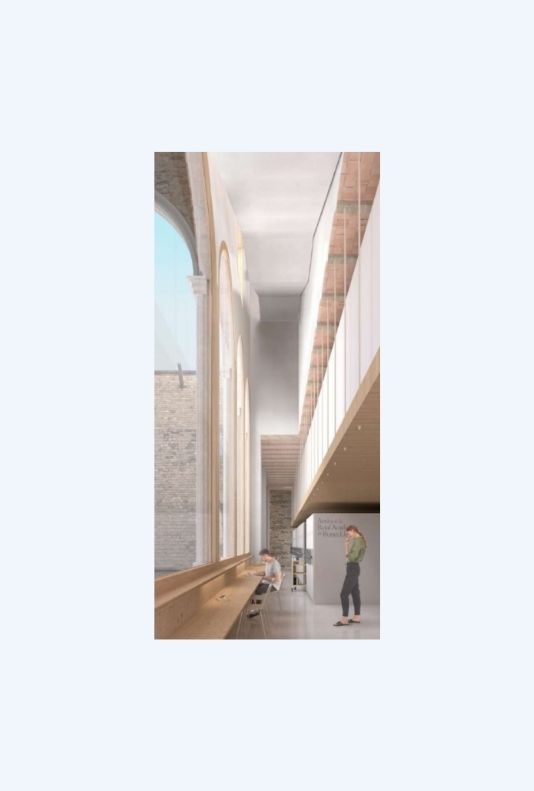
First Floor – Preservation of legacy: Headquarters of the Reial Acadèmia de Bones Lletres. Its double-height library recovers the Gothic arches, improving passive thermal comfort.
Second and Third Floors – Sustainable workspace: Spaces for the ILC located along the facade to leverage daylight and facilitate natural cross-ventilation, reducing reliance on artificial climate control.
Roof – Green infrastructure: Transformed into a space with green roofs to improve thermal insulation and reduce heat absorption.
The design organizes the Palau to be a living space, aligned with the global decarbonization goals for 2050:
Ground Floor – The public heart: It will house a multipurpose hall and a café in the Gothic courtyard. The reopening of historical windows will maximize natural lighting from the base.
First Floor – Preservation of legacy: Headquarters of the Reial Acadèmia de Bones Lletres. Its double-height library recovers the Gothic arches, improving passive thermal comfort.
Second and Third Floors – Sustainable workspace: Spaces for the ILC located along the facade to leverage daylight and facilitate natural cross-ventilation, reducing reliance on artificial climate control.
Roof – Green infrastructure: Transformed into a space with green roofs to improve thermal insulation and reduce heat absorption.
BREEAM Certification
Commitment to excellence

"Our work at the Palau Requesens focuses on reducing the carbon footprint both during the construction phase and its future operation. It is not just about rehabilitating a space, but about ensuring its climate resilience. To achieve this, we apply the Life Cycle Assessment (LCA) methodology, which allows us to audit every material and every process. This technical precision is what guarantees that an asset with centuries of history is not only preserved, but also meets the standards of comfort, efficiency, and sustainability required by the 21st century."
Martí Riera, Director of the Sustainability Department at SOCOTEC
"Our work at the Palau Requesens focuses on reducing the carbon footprint both during the construction phase and its future operation. It is not just about rehabilitating a space, but about ensuring its climate resilience. To achieve this, we apply the Life Cycle Assessment (LCA) methodology, which allows us to audit every material and every process. This technical precision is what guarantees that an asset with centuries of history is not only preserved, but also meets the standards of comfort, efficiency, and sustainability required by the 21st century."
Martí Riera, Director of the Sustainability Department at SOCOTEC
Carbon Quantification
The Foundation of Environmental Viability
To ensure the long-term viability of the building and comply with international sustainability standards, SOCOTEC applies a rigorous carbon study based on the Life Cycle Assessment (LCA) methodology. This analysis allows us to measure the global environmental impact of Palau Requesens, breaking it down into four critical phases:
1. Detailed Inventory and Heritage Cataloging
The first step consists of an exhaustive survey of the building's physical reality. We precisely differentiate between preserved heritage elements (which act as existing carbon sinks) and the new components required for the rehabilitation. This cataloging identifies which 14th-century structures can continue to provide structural or thermal value, avoiding the environmental cost of new manufacturing.
2.Assignment of Emission Factors (EPD)
We utilize specialized databases and Environmental Product Declarations (EPD) to assign a specific environmental impact value to each incorporated material. We measure not only the CO2 emitted during raw material extraction but also that generated by processing and transport to the site, ensuring that supplier selection is aligned with low-emission targets.
3. Scenario Modeling and Operational Phase
Using advanced simulation tools, we create a predictive model that projects the building's emissions during two key stages:
Rehabilitation Phase: The immediate impact of the construction work.
In-Use Phase (Service Life): Projected energy consumption over decades. This modeling allows for real-time design adjustments to optimize the net carbon balance and ensure building efficiency throughout its entire operation.
4. Circularity and Zero Waste Strategy
Carbon quantification allows us to identify real circular economy opportunities. We evaluate the potential for reusing materials from selective demolition to reincorporate them into the project or assign them to other industrial processes. The goal is to minimize construction waste and reduce the demand for virgin materials, responsibly closing the building's life cycle.
How we integrate BREEAM criteria
Our environmental consultancy service guides the project toward the BREEAM ES New Construction 2015 certification, focusing on:
This project is a tangible example of GREEN TRUST, our service line based on the six objectives of the European Union Taxonomy.
With GREEN TRUST, we transform historical heritage into a benchmark for resilience in the face of climate change