Laboratory for the control of materials for construction sites

Specialists in quality analysis for building, infrastructure and civil works

SOCOTEC's Material Control Laboratory for construction sites offers a comprehensive service of analysis, testing and technical control to ensure quality and regulatory compliance in all types of construction projects. With a presence in multiple regions of Spain, we operate with state-of-the-art equipment and a highly qualified technical team.

Our tests range from raw materials to the most complex structural elements, guaranteeing technical reliability during all phases of work: design, execution and maintenance.

TESTING LABORATORY

What is material control on construction sites?

Laboratorio de control de materiales para obras

Quality control in construction through laboratory tests consists of verifying the behaviour of the materials used on site, ensuring their conformity with technical specifications, regulations and requirements for durability and resistance. This service is key to preventing structural pathologies and extending the useful life of any infrastructure.

We act as an independent, technical and reliable laboratory, with accreditation within the General Registry of the CTE (CAT-L-104 and CAT-L-114), guaranteeing certified tests in all its headquarters.

Main materials on which we carry out quality studies

  • Concrete and precast concrete.
  • Bituminous mixtures: SMA, AUTL, discontinuous, porous.
  • Natural and recycled aggregates, cements, mortars and water.
  • Ceramic materials.
  • Natural stone and technical paints.
  • Special elements such as prefabricated gutters or R+D+i tests.

Laboratory and material control services for construction sites

At SOCOTEC we provide technical solutions adapted to the highest national and international standards. Our building materials control laboratory services  are grouped into:

  • Geotechnical identification, classification and characterization.
  • Soil mechanics, laboratory and on-site tests.

  • Design and control tests of bituminous mixtures.
  • Characterization from the plant to the commissioning.

  • Control of fresh and hardened concrete.
  • Structural integrity, anchoring, tensioning and strength tests.

  • Concrete, agglomerate and prefabricated ceramic production plants.

  • Diagnostics, research assays and load tests.

Laboratorio de control de materiales para obras


Example of actions and study of materials for works: R+D+i research projects

At SOCOTEC we have extensive experience in the development of new methodologies and advanced tests through applied research projects in collaboration with public bodies and private companies. Below, we highlight some relevant actions carried out by our materials control laboratory for construction sites:

Research on SMA (Stone Mastic Asphalt) Bituminous Mixtures

  • Development of a slip test: Design of an experimental procedure to predict in the laboratory the slip resistance of SMA mixtures, improving their safety and performance in pavements.
  • Regulatory participation: Contribution to the drafting of a technical article with specifications for the standardized implementation of these mixtures on site.
  • Analysis of international additives: Comparative study of the behavior of SMA mixtures used in Mexico with different additives, to evaluate their suitability in different climatic contexts.

Prefabricated gutters with recycled concrete for technical wiring

  • Heavy traffic simulation: Development of a specific test that reproduces the passage of cranes and self-propelled machinery on prefabricated gutters, evaluating the strength and durability of elements made with recycled materials.

Evaluation of Photocatalytic Treatments

  • Evolution of NOx activity: Longitudinal study of the behaviour of photocatalytic treatments applied to pavements, analysing their effectiveness in the degradation of nitrogen oxides over time.

Tests for the identification of structural pathologies

  • Reactivity and durability of materials: Specific tests for the detection of reactivity phenomena in construction materials.
  • Resistant characterization of masonry walls: On-site and laboratory evaluation of the mechanical behavior of traditional walls, in structural rehabilitation processes.

Application of the Phoenix Test in Bituminous Mixtures

  • Evaluation of strength , toughness and breaking energy by means of the Phoenix test, in accordance with NT-01/22 and NLT 383/20 standards. This procedure allows to characterize the fracture behavior of asphalt mixtures with high reliability.


Machinery: advanced technology for quality control in construction materials

Our construction materials quality laboratories are equipped with state-of-the-art automation systems, designed to optimize testing processes, minimize human error, and strengthen the traceability of each sample.

Among the most outstanding teams are:
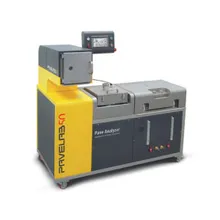
MAQUINARIA CONTROL DE CALIDAD

Automatic Asphalt Analyzer

This system fully automates the analysis of bituminous mixtures, including the extraction and quantification of binders and aggregates. It allows high precision in the results, and also:

  • It reduces the exposure of personnel to chlorinated solvent vapors, protecting occupational health.
  • It minimizes polluting emissions into the environment, aligning with sustainability objectives.
  • Optimizes test times, speeding up the delivery of results on site.
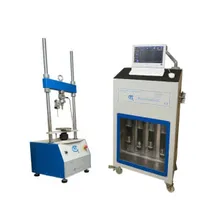
MAQUINARIA CONTROL DE CALIDAD

Automatic triaxial flooring

This equipment allows triaxial tests to be carried out on soil samples in a fully automated way. It is used to determine essential strength and deformability parameters in geotechnical studies. Its key advantages are:

  • Precise execution of loading and consolidation cycles.
  • Continuous and automatic capture of stress-strain data.
  • Increased repeatability and reliability in complex soil mechanics analysis.
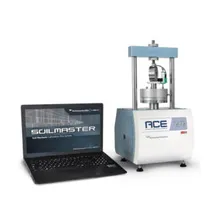
Automated strain and strength measurement system

We have integrated sensors and digital platforms to record, in real time, critical data during soil deformation and resistance tests of structural materials. This makes it possible to:

  • Complete digital traceability of each test.
  • Elimination of manual transcription errors.
  • Immediate access to results through technical visualization platforms.

This combination of automation, precision and sustainability reinforces our commitment as a benchmark company in quality control in construction, offering technical solutions that not only meet, but anticipate the requirements of the sector.

Why choose SOCOTEC as a construction quality control company for your project?

  • National coverage with its own laboratories in strategic areas.
  • CTE accredited materials control laboratory for works (CAT-L-104 and CAT-L-114).
  • Expert technical team and in continuous training.
  • Innovative tailor-made solutions.
  • High commitment to sustainability and safety.

Our material control laboratories for construction sites in Spain

National coverage with specialized technical response.

SOCOTEC has a network of laboratories strategically distributed throughout the national territory. Each centre is equipped with advanced technology and specialised equipment to meet the different needs of on-site quality control, from physical and mechanical tests to technical audits and on-site support.


Montcada i Reixac

Barcelona

Technical reference centre for bituminous mixtures, concrete and precast products. It stands out for its development capacity in R+D projects and its state-of-the-art automated equipment.

See laboratory →

Cubelles

Barcelona

Laboratory with experience in the analysis of recycled materials, aggregates and ceramic products. It supports projects related to sustainability and circularity under construction.

See laboratory →

San Sebastián de los Reyes

Madrid

Specialized in material control tests for building and civil works. It offers direct technical support on site and in the laboratory, including soils, concrete, asphalt and structural studies.

See laboratory →

Carlet

Valencia

This laboratory managed by Intercontrol, A SOCOTEC Company, is responsible for carrying out all kinds of tests on construction materials, as well as environmental analyses.

See laboratory →

Vitoria-Gasteiz

Basque Country

Analytical and operational capacity of our laboratories in a strategic northern location for the construction and infrastructure sectors.

Explore laboratory →

Want to talk to our material quality control labs?

Frequent answer

Mercado Abaceria Ingeniería
01 / 02

A building materials laboratory is a specialized technical facility that carries out tests, analyses and verifications on the materials used in construction projects to ensure that they comply with current technical regulations and the required quality specifications. These laboratories play a critical role in the structural safety, durability and performance of built infrastructure. At SOCOTEC, our laboratories are equipped with advanced technology and have highly qualified professionals who carry out tests on concrete, steel, asphalt, soils, aggregates, ceramics, prefabricated and multiple construction materials. Our services range from quality control during the production and execution phase of works to studies of structural pathologies, research into innovative materials and R+D+i projects. Materials laboratories are essential to verify the conformity of the materials used, prevent structural failures, optimize the performance of constructions and provide objective technical evidence that supports decision-making in building, civil works and infrastructure projects.


The quality control of pavements requires a series of specialized tests that guarantee their adequate structural behavior, durability and safety. At SOCOTEC we carry out comprehensive tests on asphalt agglomerates that include both the design and control of bituminous mixtures, characterizing the material from the production plant to the commissioning. The main tests on asphalt pavements include: granulometric analysis of the aggregates to verify the correct dosage; Marshall tests to determine the stability and deformation of the mixture; determination of bitumen content and analysis of its properties; compaction tests to verify the density achieved in situ; measurement of the slip resistance coefficient to ensure road safety; permeability tests; determination of permanent deformation resistance by rolling tests; and analysis of fatigue resistance. In addition, we carry out non-destructive tests such as auscultation of pavements by means of an impact deflectometer, georadar for the detection of internal pathologies, and measurements of surface regularity. SOCOTEC is developing innovative projects such as a test to predict the slip resistance of bituminous mixtures in the laboratory, also participating in the development of technical specifications for this type of mixtures, which places us at the forefront of pavement quality control.


SOCOTEC has an extensive and rigorous system of accreditations and certifications that guarantee the technical excellence and reliability of our laboratory services. Our main accreditations include:

Sector-specific accreditations:

  1. Accreditation within the General Registry of the CTE (Technical Building Code) with the numbers CAT-L-104 and CAT-L-114, which enables us to carry out tests in the field of building.
  2. ENAC (National Accreditation Entity) accreditation to carry out ballast tests on railway infrastructures.
  3. Certification in Inspection and Control of facilities, tanks, pipelines and equipment of petrochemical refineries by the AEQST (Association of Chemical Companies of Tarragona).

Certified Management Systems:

  1. Innovation Management System according to the UNE-EN ISO 56001:2024 standard, which accredits our commitment to R+D+i.
  2. Quality Management System according to the UNE-EN ISO 9001:2015 standard, guaranteeing standardised processes aimed at customer satisfaction.
  3. Environmental Management System according to the UNE-EN ISO 14001:2015 standard, demonstrating our commitment to sustainability.
  4. Occupational Health and Safety Management Systems according to the UNE-EN ISO 45001:2018 standard, prioritising the protection of our professionals.
  5. EMAS (Eco-Management and Audit Scheme) environmental accreditation, European recognition for excellence in environmental management.

Specific technical certifications:

  1. Certified for building structure consultancy, which guarantees our technical capacity in complex structural projects.

All these certifications and accreditations are available for consultation in www.socotec.es and can be verified in the corresponding bodies, demonstrating our commitment to the highest technical quality, transparency and continuous improvement.

The construction of a building requires an exhaustive battery of quality control tests that guarantee the structural safety, durability and regulatory compliance of the work. At SOCOTEC we carry out comprehensive tests that cover all construction phases:

Concrete control:

  1. Fresh concrete testing: determination of consistency by Abrams cone, measurement of air content, temperature and density.
  2. Hardened concrete tests: breaking cylindrical specimens to determine compressive strength, indirect tensile tests, and determination of modulus of elasticity.
  3. Hardened concrete core extraction for in-situ strength verification.
  4. Water permeability and carbonation tests to evaluate durability.

Structural integrity tests:

  1. Tests using non-destructive techniques such as sclerometer to estimate the surface hardness of concrete.
  2. Ultrasound to detect internal discontinuities and fissures.
  3. Infrared thermography for locating hidden defects.
  4. Pull-off tests to verify coating adhesion.

Tests of specific structural elements:

  1. Tests of mechanical and chemical anchors to verify their load capacity.
  2. Control of structural steel elements through dimensional analysis and weld verification.
  3. Tests of passive reinforcement and prestressing and post-tensioning elements.
  4. Load tests on slabs, slabs and complete structures to verify their real behaviour.

Control of foundation elements:

  1. Pile integrity tests using sonic techniques (PIT).
  2. Static and dynamic load tests on piles.
  3. Control of diaphragm walls and containment elements.

All these tests are carried out in accordance with current regulations (EHE-08, CTE DB SE and applicable European regulations) and provide the necessary technical documentation for the reception of the work and the obtaining of licences.

Structural pathology studies are specialised technical analyses aimed at diagnosing, investigating and providing solutions to problems, deterioration or anomalies that affect existing building structures and infrastructures. These studies are essential when symptoms of structural damage are detected, such as cracks, deformations, corrosion of reinforcement, detachments, dampness, foundation problems or any manifestation that may compromise the safety, functionality or durability of the construction.

At SOCOTEC we carry out complete studies of structural pathologies that include:

Diagnostic phase: Detailed visual inspection documenting all observed injuries, compilation of original technical documentation (project, modifications, maintenance history), analysis of the context (loads, environmental conditions, use of the building), and development of hypotheses about the probable causes of the problem.

Research tests: Carrying out tastings and extractions of samples for laboratory analysis, non-destructive tests (sclerometer, ultrasound, georadar, thermography, pacometer for locating reinforcement), chemical analysis of concrete to detect carbonation, presence of chlorides or sulphates, determination of mechanical resistance by extraction of cores, and geotechnical studies when foundation problems are suspected.

Load tests: When it is necessary to verify the real resistance capacity of the structure, we carry out controlled load tests according to regulations, monitoring the structural behavior using specific instrumentation (deflectometers, extensometers, accelerometers), and evaluating whether the structure meets the established safety and service requirements.

Diagnostic report and recommendations: We prepare a detailed technical report that includes the precise description of the injuries, the analysis of causes, the evaluation of the degree of structural affectation, the implications for safety, and the proposals for intervention and repair with indicative budgets. These studies are essential for planning rehabilitation actions, determining technical responsibilities, and guaranteeing the safety of users.

Soil mechanics is the discipline of geotechnical engineering that studies the physical and mechanical behaviour of soils to assess their suitability as a foundation ground, construction material or infrastructure support. This speciality is essential in any construction project, since the behaviour of the terrain directly conditions the safety, stability and durability of the structures built on it.

At SOCOTEC we carry out complete soil mechanics studies that include:

Soil identification and classification: We perform laboratory tests to determine the physical characteristics of soils, including particle size analysis to determine the distribution of particle sizes, determination of Atterberg limits (liquid limit and plastic limit) that define soil plasticity, natural moisture content, relative density, and classification according to standardized systems (USCS,  AASHTO). These parameters allow the type of soil to be identified and its general behaviour to be predicted.

Geotechnical characterization: We carry out mechanical tests in the laboratory that determine the resistant and deformational properties of the soil: simple compression tests to evaluate the shear resistance in cohesive soils, triaxial tests that simulate real confinement conditions, direct cut tests, determination of compressibility through edometric tests, Proctor tests to define the optimal conditions of compaction,  and CBR (California Bearing Ratio) tests to evaluate the ground's bearing capacity in paving projects.

On-site tests: We complement the laboratory tests with tests carried out directly in the field: dynamic penetration tests (SPT, DPSH) that provide information on the consistency and stratigraphy of the soil, static penetration tests (CPT), plate load tests to evaluate the deformation modulus, in-situ permeability tests (Lefranc, Lugeon), measurement of the water table,  and sampling by mechanical probes for laboratory analysis.

Practical applications: Soil mechanics studies are essential for foundation design (shallow or deep), slope and excavation stability assessment, retaining structure design, terrain improvement projects, pavement design, assessment of foreseeable settlements, and geotechnical hazard analysis. At SOCOTEC, our specialized geotechnicians interpret the results of the tests and provide specific technical recommendations to guarantee the viability and safety of construction projects.

At SOCOTEC we have the technical capacity to carry out quality control on a wide variety of construction materials, adapting to the specific needs of each project. In addition to traditional materials such as concrete, steel and asphalt, we carry out specialized tests on:

Aggregates and recycled aggregates: Complete characterization of natural and recycled aggregates by particle size analysis, determination of shape and wear coefficients Los Angeles, tests for friability, fine content, sand equivalent, densities, water absorption, and resistance to freeze-thaw cycles. We assess the suitability of recycled aggregates from construction and demolition waste (CDW) for use in structural or pavement applications, contributing to the circular economy.

Cements: Chemical and physical analysis of cements, determination of setting times, expansion, mechanical resistance at different ages, fineness of grinding, and verification of conformity according to UNE-EN 197-1 standards.

Mortars: Control of mortars for masonry, coatings and structural repairs by testing consistency, water retention, air content, density, and mechanical resistance (compression and flexural). Evaluation of specialty mortars such as self-leveling mortars, concrete repair mortars, and high-performance technical mortars.

Water: Water analysis for concrete mixing, verifying that it does not contain harmful substances that may affect the setting, strength or durability of the concrete. Determination of pH, chloride content, sulfates, organic substances and other impurities according to EHE-08 standard.

Precast concrete: Dimensional and quality control of precast elements such as beams, pillars, slabs, vaults, blocks, paving stones, curbs and special elements. Verification of mechanical strengths, surface finishes and compliance with dimensional tolerances. SOCOTEC participates in innovative projects such as the development of prefabricated channels with recycled concrete for cables, including the design of specific tests that simulate the passage of cranes and self-propelled machines on these parts.

Ceramics: Tests on bricks, ceramic blocks, tiles, ceramic tiles and façade elements. Determination of mechanical resistance, water absorption, frostiness, impact resistance, coating adhesion, and thermal characteristics.

Natural stone: Characterization of natural stones (granite, marble, limestone, slate) by means of tests of compressive strength, bending, wear, frostiness, water absorption, resistance to accelerated aging, and petrographic analysis. Suitability assessment for specific applications such as pavements, façades or structural elements.

Paints and coatings: Adhesion tests by pull-off, abrasion resistance, water vapour permeability, fire behaviour, accelerated ageing, and verification of technical characteristics declared by manufacturers.

Pathology studies: Analysis of materials affected by pathologies to determine causes of deterioration (carbonation, attack by sulphates or chlorides, arid-alkali reaction, frost, compatibility problems between materials) and propose appropriate repair solutions.

The versatility of our laboratories and the experience of our technical team allow us to tackle practically any construction material, guaranteeing the highest quality and safety in all projects.

At SOCOTEC we maintain a firm commitment to innovation and research, developing R+D+i projects that place our laboratories at the technological forefront of the construction sector. Our Innovation Management System certified according to the UNE-EN ISO 56001:2024 standard supports this institutional commitment. Among our most outstanding projects are:

Research on special bituminous mixtures: We are developing innovative methodologies to improve road safety by designing specific tests that allow predicting the slip resistance of bituminous mixtures in the laboratory. This project is essential to guarantee safer pavements, especially in rainy conditions. In addition, we actively participate in the development of technical articles and regulatory specifications for this type of blends, contributing to the development of the sectoral regulatory framework and sharing our knowledge with the technical community.

Development of sustainable concretes with recycled aggregates: We investigate the technical feasibility of using concretes made from recycled aggregates from construction and demolition waste (CDW) in structural and non-structural applications. Specifically, we have developed an innovative project on prefabricated channels with recycled concrete intended to house cables in industrial facilities or infrastructures. This project includes the design and validation of a specific test that simulates real working conditions, reproducing the passage of cranes and self-propelled machines on these prefabricated parts to verify their resistance and durability. This line of research contributes directly to the objectives of circular economy and sustainability, demonstrating that it is possible to reuse demolition materials while maintaining high standards of quality and safety.


Research in advanced non-destructive techniques: We develop and validate new non-destructive testing techniques that allow the condition of existing structures to be evaluated without the need to sample or cause damage. These techniques include the application of high-resolution georadar, advanced infrared thermography, and continuous structural monitoring systems using intelligent sensors.

Testing digitalization projects: We implement digital test management systems that allow full traceability, real-time access to results, and predictive analysis using artificial intelligence algorithms that identify patterns and anticipate possible quality problems.

Collaboration with universities and technology centres: SOCOTEC has collaboration agreements with academic institutions and research centres to develop joint R+D+i projects, participate in European research programmes, and train new generations of professionals in the latest technologies applied to quality control in construction.

These projects demonstrate that SOCOTEC not only performs conventional tests, but also actively contributes to the technological development of the sector, continuously improving our methodologies and anticipating the future needs of our customers. For more information about our innovation projects and laboratory services, please visit www.socotec.es.