Hidrógeno Verde

Hydrogen Consultancy

Specialized Hydrogen Energy Consulting Services

Renewable hydrogen has established itself as a fundamental pillar in the energy transition and global decarbonization.

With its capacity to store and transform clean energy, hydrogen has the potential to revolutionize industrial sectors, transportation, and more. At SOCOTEC, we offer a comprehensive, specialized hydrogen consulting service to support our clients through all phases of their green hydrogen projects, from production to final use.

Energy consulting services specialized in Hydrogen

Renewable hydrogen has established itself as a fundamental pillar in the energy transition and global decarbonisation.

With its ability to store and transform clean energy, hydrogen has the potential to revolutionize industrial sectors, transportation, and more. At SOCOTEC, we offer a comprehensive  specialized hydrogen consulting service  to accompany our customers in all phases of their green hydrogen projects, from production to final use.


Tailor-made hydrogen consulting for each client

At SOCOTEC, we understand that each sector faces specific challenges, which is why we tailor our hydrogen consulting  solutions to the needs of each sector, such as:

Technical advice on the installation of hydrogen stations and we ensure compliance with the regulatory requirements for their operation.

We facilitate the transition to hydrogen-powered vehicle fleets, improving both energy efficiency and sustainability.

We conduct feasibility studies and provide solutions for clean and alternative hydrogen-based transport projects.

We support the substitution of fossil fuels with green hydrogen in various industrial sectors, contributing to the reduction of the carbon footprint and the improvement of energy efficiency.

Hidrógeno Verde


Energy Consulting Solutions for Green Hydrogen Implementation

Renewable hydrogen is not only a viable alternative to fossil fuels, but also contributes to meeting the climate goals set out in international agreements such as the Paris Agreement, as it is a CO₂-free energy source. At SOCOTEC, we provide our clients with the necessary guidance to carry out their projects related to the implementation of green hydrogen solutions, ensuring an effective and sustainable implementation.

Our team of experts is ready to guide you at every stage, providing technical advice and helping with obtaining  environmental permits and authorizations, in order to comply with local and international regulations.


Our hydrogen consulting services cover all stages:

Consultoría técnica

Technical Consulting

We assist in the definition and planning of each green hydrogen project, evaluating the most suitable technological options and ensuring that the project is economically viable and meets all environmental and regulatory requirements.

Ingeniería de diseño y ejecución

Design and execution engineering

Our team of specialized engineers is responsible for the design and execution of tailor-made solutions for the production and storage of green hydrogen. From equipment selection to detailed engineering, we optimize every aspect of the project to ensure energy efficiency and minimize operational risks.
Supervisión técnica

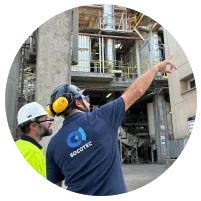
Technical supervision

We ensure that the execution of the project is carried out according to the highest quality standards, within the established deadlines and budgets. Our technical supervision service includes continuous monitoring of activities, ensuring safety and regulatory compliance at every stage.
instalaciones industriales de hidrógeno

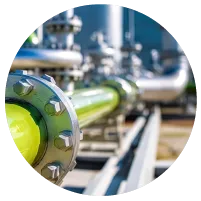
Risk analysis in industrial hydrogen facilities

Safety is a primary factor in green hydrogen projects. We conduct a thorough risk analysis, identifying potential hazards and developing an effective mitigation plan. This preventative approach ensures that facilities meet the highest standards of industrial safety.
Pruebas y ensayos

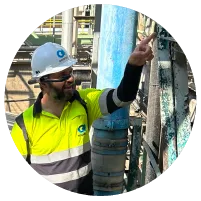
Testing

We carry out technical tests and operational trials to verify the performance and reliability of the systems, ensuring that the hydrogen facility performs optimally during its lifetime.

Gestión financiera de proyectos de hidrógeno

Financial management of hydrogen projects

Financial viability is crucial to the success of any project. We offer support in financial management, helping our clients to optimize costs and to look for sources of financing to make their green hydrogen projects a reality.

Success stories

One of the most outstanding projects at SOCOTEC was our support in the development of the first green hydrogen production and dispatch plant for mobility in the Community of Madrid, in collaboration with Exolum-Alsa.

This pioneering project, designed by Fusion Fuel, features 21 modular structures equipped with EVO-SOLAR solar concentrating technology, capable of producing 40 tonnes of green hydrogen per year, enough to supply an on-site hydrogen refuelling station.

At SOCOTEC, we play a crucial role in the regulatory design of the facility, ensuring compliance with the European ISO 19880-1:2020 standard, which sets the parameters for safety in hydrogen production. In addition, we collaborate in the risk assessment and in the creation of a mitigation plan to ensure that the plant operates safely and efficiently.


Why choose SOCOTEC as an energy consultancy for hydrogen?

  • Permitting and legalisation: We manage the complete process of obtaining environmental permits and authorisations for the construction and operation of industrial hydrogen facilities.
  • Tailor-made solutions: We adapt our solutions according to the specific needs of each sector and client.
  • Regulations and safety: We comply with international standards and guarantee safety in every phase of the project.


SOCOTEC is the ideal partner to ensure the success of your green hydrogen project.

Trust our specialized hydrogen consulting services and move forward with the next step towards a more sustainable future. Contact us and start your journey to decarbonization.

Frequently Asked Questions Hydrogen Consulting

01 / 04

Green hydrogen is an energy vector produced by electrolysis of water using electricity from renewable energy sources, which makes it possible to generate hydrogen without direct CO₂ emissions  during its production.

Its development is key in the energy transition , as it allows decarbonisation of sectors that are difficult to electrify, such as heavy transport, energy-intensive industry or certain industrial thermal processes. Unlike grey or blue hydrogen, it does not depend on fossil fuels, becoming a strategic solution to achieve climate objectives and move towards a sustainable energy model.

A hydrogen plant is a facility for the production, storage and distribution of hydrogen as an energy carrier. When its main function is to supply vehicles, it is called a hydrogen station.

A hydrogen station operates similarly to a conventional filling station, but supplies hydrogen as fuel  for fuel cell vehicles. These facilities allow for quick refuelling, around 5–10 minutes, and offer a longer range compared to many battery electric vehicles. For this reason, they are becoming particularly relevant in the development of sustainable mobility, especially in heavy transport, logistics fleets, buses and long-distance transport.

A green hydrogen plant is made up of several systems that make it possible to produce, store and supply hydrogen safely and efficiently. The process begins with a renewable energy source (solar, wind or hydro) that powers an electrolyser, responsible for separating hydrogen from water through electrolysis.

Once produced, the hydrogen is compressed  to reach high pressures and facilitate storage in high-pressure tanks, which can operate up to 350–500 bar depending on the end use. The installation also includes refrigeration, control and safety systems, as well as dispensers in the case of hydrogen stations. Production capacity can vary from small-scale plants to facilities that supply several thousand kilograms daily.

The installation of a hydrogen plant requires compliance with strict industrial safety, technical and environmental regulatory requirements, due to the physical-chemical characteristics of hydrogen and its high reactivity.

It is necessary to develop a technical project in accordance with current regulations, obtain the  corresponding building permits, environmental authorizations and activity permits. In addition, safety studies, risk analyses and environmental impact assessments must be carried out. Given that the legal framework may vary depending on the autonomous community or the country, it is key to have a specialised permitting  management, capable of coordinating administrative procedures and ensuring regulatory compliance with the competent authorities.

In a green hydrogen project, services cover the entire life cycle of the facility, from the conceptual phase to operation. They include specialized technical consulting, plant design engineering, permitting management, risk analysis and technical supervision during construction.

In addition, operational tests and tests , verification of regulatory compliance and support in the management of aid and public financing linked to the energy transition are developed. This comprehensive approach makes it possible to guarantee the technical, regulatory and economic viability of hydrogen production, storage or supply facilities.

Permitting is the process of managing and obtaining all the licenses, authorizations and administrative permits necessary to build and operate a hydrogen facility.

Given the industrial nature and safety requirements associated with hydrogen, this process includes environmental impact assessment, compliance with industrial safety regulations, urban planning verification and adaptation to specific energy regulations. Proper permitting management is key to avoiding delays, ensuring legal compliance and ensuring that the installation complies with applicable technical and environmental standards.

Water treatment is essential in the production of green hydrogen, as electrolysis requires high-purity water to operate efficiently and safely.

The water used in the electrolyzer must undergo filtration, demineralization and quality control processes, as the presence of impurities can damage the equipment, reduce energy efficiency and shorten the useful life of the installation. A properly designed hydraulic system ensures the stability of the process and the quality of the hydrogen produced. Therefore, the design and implementation of water treatment facilities is a critical element in any hydrogen production plant.

Green hydrogen has strategic applications in sectors where direct electrification has technical or economic limitations.

It stands out especially in heavy transport and logistics, enabling the decarbonisation of trucks, buses and long-distance fleets thanks to its high range and fast refuelling. It is also key in energy-intensive industry (such as steel, chemical or refining), in power generation and in certain railway and maritime applications. Its ability to reduce emissions in sectors that are difficult to electrify makes it a fundamental tool within the energy transition and national decarbonisation strategies.

Green hydrogen offers key advantages over fossil fuels by being produced from renewable energies and not generating direct CO₂ emissions  during use.

Unlike natural gas or diesel, its production by electrolysis with renewable electricity makes it possible to significantly reduce the carbon footprint of the energy system. In addition, it enables large-scale energy storage, fast refuelling and a high range in heavy-duty transport applications. These characteristics make it a strategic alternative to replace fossil fuels in industrial and logistics sectors where direct electrification is limited.

Hydrogen projects require compliance with quality, environmental and safety management systems, which ensure technical reliability and regulatory compliance.

Among the usual certifications in this field are ISO 9001 (quality management), ISO 14001 (environmental management),  ISO 45001 (occupational health and safety) and R+D+i management systems such as UNE 166002 . These certifications accredit technical capacity, process control and commitment to sustainability and safety in the development of advanced energy infrastructures such as hydrogen facilities.

The experience in green hydrogen projects is based on the combination of multidisciplinary technical knowledge and participation in real development, tendering and consulting initiatives.

Having teams specialised in renewable energies, energy efficiency, industrial engineering and permitting allows us to tackle hydrogen production, storage and supply projects with technical and regulatory guarantees. Participation in sectoral working groups, hydrogen station tender processes and technical forums in the energy sector strengthens the ability to anticipate regulatory requirements and technological trends in a rapidly expanding market.

Water electrolysis is the process by which green hydrogen is produced using electricity from renewable sources.

In the electrolyzer, the previously treated water is subjected to an electric current that separates the water molecule (H₂O) into hydrogen (H₂) and oxygen (O₂). The hydrogen generated is collected, dried and subsequently compressed for storage or distribution. Since hydrogen is a lightweight and highly reactive gas, the process requires strict control, safety, and regulatory compliance systems to ensure safe and efficient operation.

The cost of developing a green hydrogen plant depends on factors such as production capacity, electrolyzer technology, storage system, connection to renewable energies, and safety and permitting requirements.

As a guideline, investment can vary from several million euros in small-scale projects to significantly higher figures in large-capacity industrial plants. In addition to the  initial CAPEX, the costs of operation, maintenance, electricity consumption and water treatment must be considered. A detailed technical-economic study is essential to correctly size the installation and guarantee its viability.

The profitability of green hydrogen depends on the cost of renewable electricity, the scale of the project, public incentives, and the price of the fossil fuels it replaces.

In sectors that are difficult to electrify, such as heavy industry or long-distance transport, green hydrogen can become a competitive solution, especially in a context of energy transition and more demanding climate regulation. In addition, public aid and support mechanisms for decarbonisation can significantly improve the financial viability of projects.

The difference between green, blue and grey hydrogen lies in their production method and the associated emissions.

Grey hydrogen is produced from natural gas by steam reforming, generating CO₂ emissions. Blue hydrogen uses the same process, but incorporates carbon capture and storage systems to reduce part of these emissions. Green hydrogen, on the other hand,  is obtained through electrolysis powered by renewable energies, with no direct carbon emissions in its production, making it the most climate-sustainable option.

Hydrogen plants in Spain must comply with European legislation related to hydrogen .

Among other provisions, the Pressure Equipment Regulations, chemical storage regulations, fire safety regulations in industrial establishments and environmental assessment procedures  may apply. In addition, each project must comply with regional and municipal regulations on urban planning and industrial activity. The correct management of the regulatory framework is key to guarantee the viability and authorisation of the project.