
SOCOTEC conducts a road information study for the N-430: Santa Amalia section, Ciudad Real
SOCOTEC provides specialized engineering services for the sustainable upgrading of road infrastructure
- Client: Ministry of Transport and Sustainable Mobility
- Location: Provinces of Badajoz and Ciudad Real
- Year: 2022
An informative study of roads to transform mobility in Extremadura and Castilla-La Mancha
The N-430 road is a fundamental connection between Badajoz and Valencia, crossing a territory of great socio-economic importance. However, the section between Santa Amalia and Ciudad Real has structural deficiencies that seriously affect road safety, the quality of life of the populations crossed and the efficiency of freight transport.
SOCOTEC has developed the informative road study for this 150-kilometre section, completing Phases A and B of the project. This technical study analyses the current problems and proposes innovative solutions that improve the capacity of the road, reduce the accident rate and minimise the environmental impact, respecting the figures of protection of the territory.
The transformation of this road infrastructure represents a commitment to sustainable mobility, user safety and the economic development of the regions of Badajoz and Ciudad Real, improving connectivity between Extremadura, Castilla-La Mancha and the Valencian Community.

Talk to our experts

CURRENT PROBLEMS
A road that needs to evolve
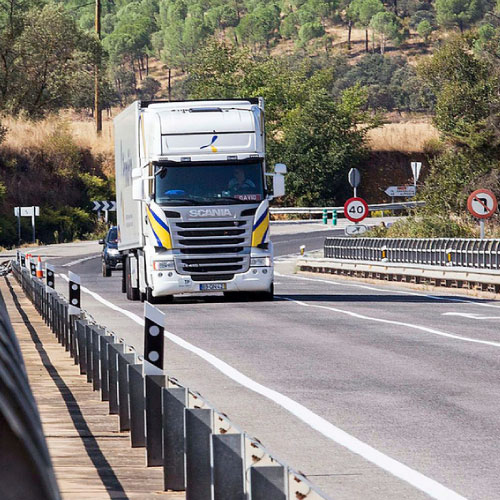
The N-430 presents in its current configuration numerous limitations that affect both mobility and the quality of life of the inhabitants of the towns crossed. With a single bidirectional carriageway and multiple direct accesses, the road crosses the urban centers of Valdivia, Casas de Don Pedro, Puebla de Don Rodrigo, Luciana and Piedrabuena.
This situation generates traffic conflict in urban areas, with drastic reduction in speed, narrowing of lanes and pedestrian crossings that increase the risk of accidents. Populations suffer negative impacts from noise pollution, polluting gas emissions and risks to public safety.
The poor geometric characteristics of the road, with minimum radii of just 65 metres, make overtaking manoeuvres difficult. The high intensity of heavy vehicles and agricultural machinery causes an inadequate level of service and a high accident rate. This informative road study identifies all these problems and proposes viable and sustainable technical solutions.
The N-430 presents in its current configuration numerous limitations that affect both mobility and the quality of life of the inhabitants of the towns crossed. With a single bidirectional carriageway and multiple direct accesses, the road crosses the urban centers of Valdivia, Casas de Don Pedro, Puebla de Don Rodrigo, Luciana and Piedrabuena.
This situation generates traffic conflict in urban areas, with drastic reduction in speed, narrowing of lanes and pedestrian crossings that increase the risk of accidents. Populations suffer negative impacts from noise pollution, polluting gas emissions and risks to public safety.
The poor geometric characteristics of the road, with minimum radii of just 65 metres, make overtaking manoeuvres difficult. The high intensity of heavy vehicles and agricultural machinery causes an inadequate level of service and a high accident rate. This informative road study identifies all these problems and proposes viable and sustainable technical solutions.
Proposed technical solution: 2+1 configuration and urban variants
The informative road study developed by SOCOTEC proposes a comprehensive transformation of the N-430 through a 2+1 configuration that allows alternating overtaking lanes in both directions of traffic. This solution significantly improves traffic flow and reduces risky situations due to forced overtaking.
The proposal includes the improvement of the geometric characteristics of the road, adapting the route for a design speed of 100 km/h. Five variants have been designed to avoid passing through the urban centres of Valdivia, Casas de Don Pedro, Puebla de Don Rodrigo, Luciana and Piedrabuena, drastically reducing noise and air pollution in these towns.
In addition, the project includes new junctions, remodelling of existing accesses and the creation of U-turns that optimise territorial connectivity and the functionality of the infrastructure. All this minimising the impact on the environmental protection figures present in the area of study, guaranteeing a balance between development and sustainability.
SOCOTEC's specialist services for informative road survey
SOCOTEC has deployed a multidisciplinary team of specialized engineers who have developed all the technical phases of this complex informative road study:
Road layout engineering: optimal design for national mobility
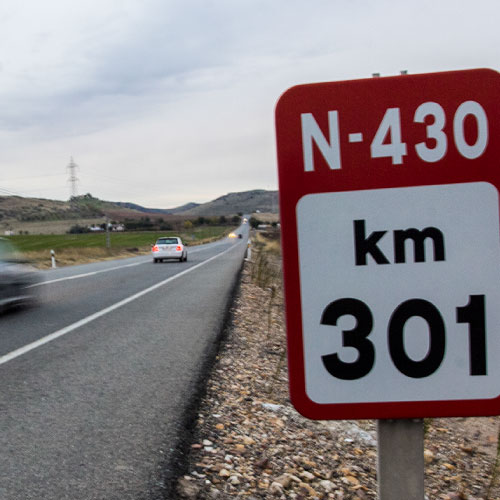
Layout engineering is one of the fundamental pillars of this informative road study. The SOCOTEC team has worked on the complete geometric design of more than 150 kilometres of road infrastructure, adapting the solution to the orographic, geotechnical and environmental conditions of the territory.
The proposed 2+1 configuration allows for two lanes in one direction and one in the opposite direction alternately every few kilometres, facilitating safe overtaking manoeuvres. This solution, widely implemented in European countries, significantly reduces the accident rate on conventional roads without the need to completely duplicate the infrastructure.
The design of the five urban variants has required an exhaustive analysis of alternatives, evaluating technical, environmental, economic and social criteria. Each variant minimises the effects on urban land and optimises landscape integration, including structures, wildlife crossings, sustainable drainage systems and environmental restoration measures that guarantee the smallest possible ecological footprint.
Experts in informative road studies and infrastructure planning
SOCOTEC has extensive experience in the development of informative studies of roads and road infrastructure projects for public administrations throughout Spain. Our multidisciplinary team integrates civil and environmental engineers, surveyors and mobility specialists who guarantee rigorous, viable and sustainable technical solutions.
We have participated in projects to refurbish and improve national, regional and local roads, always with an approach that balances mobility needs with respect for the territory and local communities. Our experience in territorial analysis, environmental assessment and design of complex infrastructures positions us as a strategic partner for projects to improve the national road network.
Do you need technical advice for your infrastructure project?
If you are looking for a technical partner specialized in informative studies, road projects or civil engineering, the SOCOTEC team is ready to offer you innovative and sustainable solutions adapted to your needs.